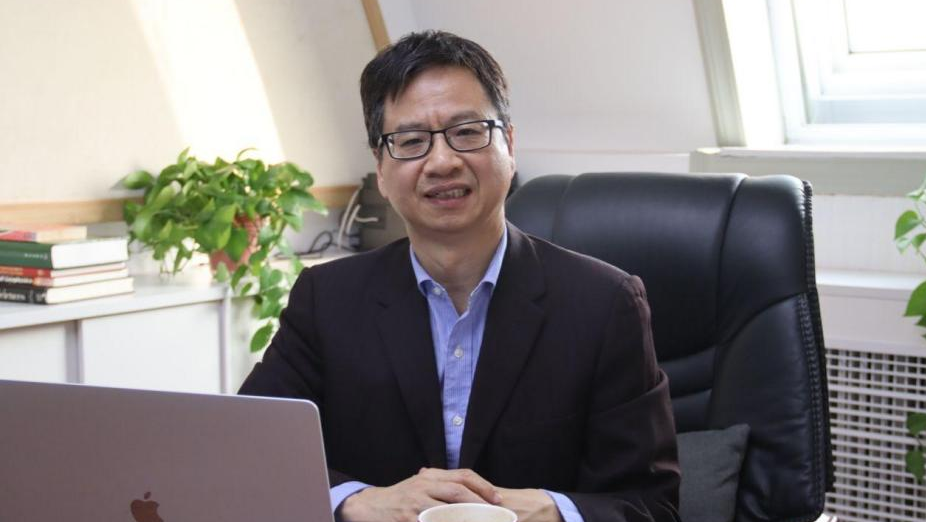
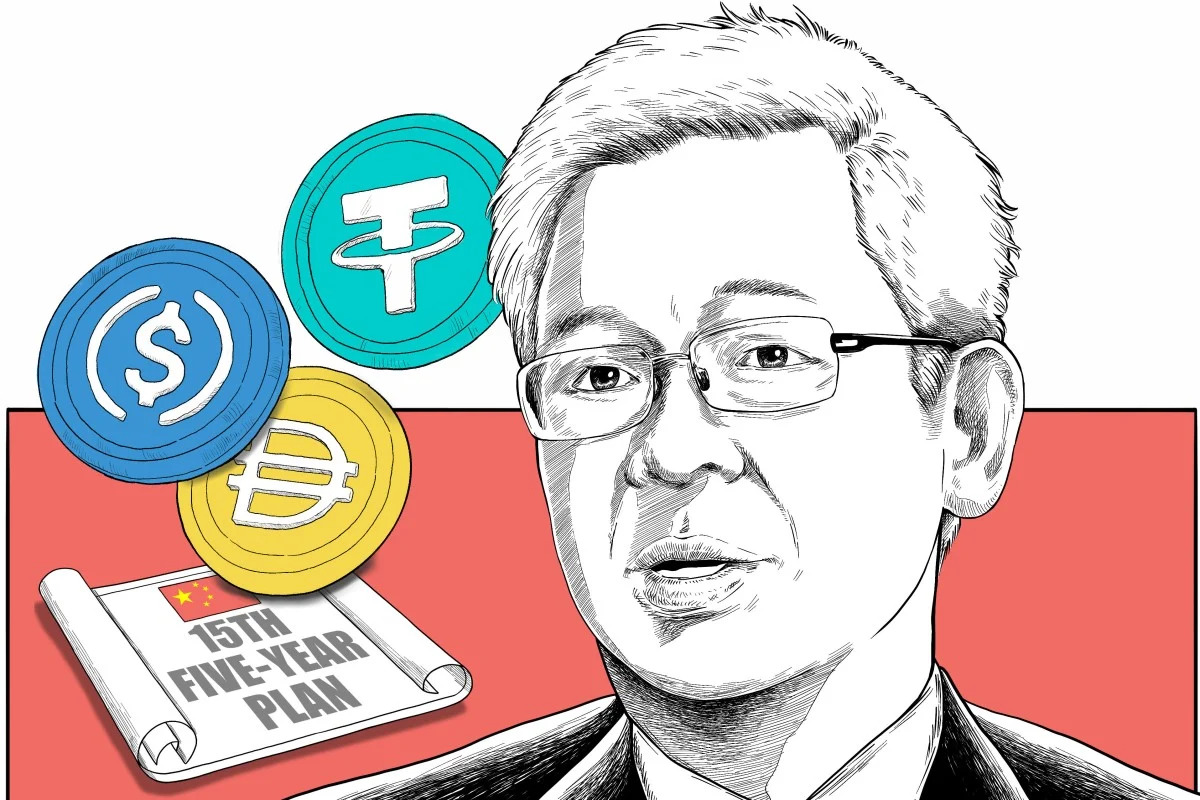
 Huang Yiping is the dean of Peking University’s National School of Development and a member of the Monetary Policy Committee of the People’s Bank of China, the country’s central bank. He also sits on the Hong Kong stock exchange’s Mainland China Advisory Group.
In his second Open Questions interview, Huang shares his thoughts on the need for caution in adopting new technologies like stablecoins and artificial intelligence, China’s next five-year plan and whether its tariff ceasefire with the US will last.
What is your assessment of the China-US artificial intelligence (AI) race? How should Beijing mitigate adverse effects on the job market as it advances new tech?
Huang Yiping is the dean of Peking University’s National School of Development and a member of the Monetary Policy Committee of the People’s Bank of China, the country’s central bank. He also sits on the Hong Kong stock exchange’s Mainland China Advisory Group.
In his second Open Questions interview, Huang shares his thoughts on the need for caution in adopting new technologies like stablecoins and artificial intelligence, China’s next five-year plan and whether its tariff ceasefire with the US will last.
What is your assessment of the China-US artificial intelligence (AI) race? How should Beijing mitigate adverse effects on the job market as it advances new tech?
AI, if better utilised, may present a historic opportunity for China to narrow its gap with the US. The global AI story is more or less about the rivalry between the two countries.
China still trails the US in zero-to-one innovation, but our advantage is applying AI and new technologies into real, practical use. We have rich application scenarios. If we look at the history of industrial revolutions, the countries that benefited most may not necessarily be the countries that made most of the original inventions. It is about how to put tech to good use.
I would also like to draw attention to the Solow paradox, which was coined by [the late] American Nobel laureate Robert Solow. [In 1987] he said, “you can see the computer age everywhere but in the productivity statistics.” He meant the wide use of computers was not leading to higher productivity.
Since then, of course, the prevalence of computers has lifted productivity.
Now the question is, how much benefit can be had amid the AI frenzy in China, and what can happen to productivity?
We have done some preliminary research. Overall, there is still no obvious evidence that AI has lifted total-factor productivity (TFP), so there is a “Solow paradox” on the macroeconomic level. But if we zoom in to examine specific sectors, especially those that manufacture AI tools and products, there has been obvious evidence that the deployment of AI has increased productivity.
So there appear to be initial signs that AI is helping grow productivity for certain sectors and enterprises in China, but we need to do more research.
My take is that AI is an opportunity for China and that if we can use it well and wisely, we may be able to catch up to the US, or at least narrow the gap we have today.
Many people fear that AI may pose some damage to the job market. My view is that such damage may be inevitable.
What really matters is whether policymakers respect and attach significance to workers and their rights. If most workers are replaced by AI, is this the kind of achievement we should pursue? Or, are there any measures to at least make these changes and job elimination less sweeping and lessen its impact?
There have already been calls from other scholars for China’s AI push to be job-oriented and accord priority to employment. If AI is allowed to obliterate a lot of jobs when China’s overall employment is already under stress, is this the kind of innovation we should have? Tech advancement must serve and increase human well-being.
As AI is advancing, and may soon encroach on the jobs market, public policy also needs to keep pace with the changes. Policymakers face a difficult task when there may be many workers who are replaced by AI, even though society as a whole may see productivity and income gains. A society can hardly maintain stability if the livelihoods, rights and welfare of these workers are overlooked. A balance has to be struck.
Can the one-year trade war truce brokered by President Xi Jinping and US President Donald Trump last? They will probably have more meetings next year; what are the prospects for relations?
It’s conducive if both presidents can catch up regularly, either via phone calls or face-to-face meetings, when, practically, all major decisions concerning bilateral ties will need to be made by them.
Of course, we still need working-level communications and preparations on both sides to lay the foundation, so that the two presidents can keep up their engagement. I am optimistic, as frequent top-level meetings are proof of mutual willingness from Xi and Trump to listen, talk and find consensus. They have a fundamental rapport despite the fierce China-US competition, and even bitter confrontation on some fronts.
But no one has a crystal ball. There will be many occasions where China and the US do not see eye to eye. But these meetings at least demonstrate a common will and a mechanism to prevent a total falling out.
In the meantime, China and its numerous businesses that rely on the US should not let their guard down, as Trump remains unpredictable, especially when it comes to trade and tariffs.
I would also like to add that, since Trump’s return to power, China has been lauded for its stability, but its policymaking, economic openness and marketisation still have room for improvement.
Stability has become a new source of appeal for China, since no business likes shocks. The US is now more volatile, not only in how it deals with China but also other countries as it dismantles the global economy and trade system it once took the lead to forge.
China’s stability and its steadfast defence of an open, multilateral global economy mean its interests align with those of many other countries. This is especially true if the US seeks to leverage its status to sign free-trade agreements with individual countries.
The proposal document for China’s 15th five-year plan, released in October, contains a raft of targets and development goals. What do you see as the top priorities?
My understanding is that the new five-year plan, which is still being drafted, may not put forth explicit growth targets, since there is already an overarching one: China’s aspirations for 2035.
First unveiled in 2020, these include doubling per capita GDP relative to 2020 levels to become a “moderately developed country”.
Many observers have thus calculated the annualised growth rate needed to progress towards that goal – around 4 to 5 per cent in the next five to 10 years. That said, nominal growth is also subject to inflation and exchange rate changes down the road.
Simply put, the 2035 goals are about keeping growth stable and sustainable in the next decade. They also provide a framework and inform what needs to be done during the period. The next five years will be particularly critical.
China is already the world’s second-largest economy. It now clearly needs to identify and extract more internal dynamism to spur and secure its development.
Therefore, against this backdrop, the growth trajectory towards 2035 centres on two internal sources: new quality productive forces and domestic demand.
The 15th five-year plan will be consistent on this front: a clear-cut policy direction for unimpeded domestic economic circulation.
When it comes to specific gauges or metrics, progress can be measured in TFP, which is the ratio of aggregate outputs to aggregate inputs.
But as TFP advances, an equally important measure of progress through 2035 must be how people’s living standards and social security are keeping pace with economic development.
Many associate the plan with the direct state management of China's previous economic era. While this is no longer the case, how will it guide China’s response to the uncertainties it faces in the next five years?
China’s five-year plans today are different in nature from those in the old era of a command economy and state planning. What the Chinese government is doing now with the five-year plans cannot be viewed through an old prism.
Today, they are more like a syllabus in broad strokes that depicts visions about what the economy may look like in five years and how it may develop. There have been some agendas in previous five-year plans that were not turned into policy or strictly implemented. The bottom line, though, is that when the government designs key policies and guidelines, they will have to align with the broad directions and targets set in five-year plans.
Also, it’s not just about goal-setting by the government. The market and businesses have important roles, too.
I would like to draw a comparison to the Made in China 2025 initiative. When the ambitious plan was first released around 2015, it triggered suspicion over whether China could really achieve its goals. Ten years on, according to some assessments, China has met or even exceeded most of the goals, thanks to the market and corporate dynamism that is unleashed by a big national plan.
Similarly, China’s plan for the next five years, including its push for new productive forces and preparing for uncertainties, also depends on the extent to which the market and businesses can play to their strengths.
For instance, with Beijing’s clear support to develop AI, competitive firms and large language models are cropping up across China. But none of them owe their success to direct government investment or involvement.
I would also like to add that such a model – government’s overall planning and guidance plus market mechanism – may work better for most developing countries. This goes against the Western doctrine of “small government, big market”.
This has been proven by the rapid rise of the “Asian tigers” – Hong Kong, Taiwan, Singapore and South Korea – which have become rich, developed economies since the 1960s. Notwithstanding criticisms from the West, many of them relied on cooperation and synergy between a proactive government and a vibrant market. Mainland China is another convincing example of the effectiveness of such a model.
As the People’s Bank of China shows less urgency and more tolerance for slow growth in new loans, will there be fewer rate cuts and other easing measures this year and in 2026? How will its monetary policy stance evolve?
First and foremost, monetary policy as a macroeconomic tool is designed to be countercyclical, to stabilise and smooth economic cycles. Specifically, when there is an economic downturn, monetary policy is intended to shore up growth. At present, “accommodative” is the tone of China’s monetary policy.
There are thus reasonable expectations that monetary policy should play a role amid soft growth. But we must also realise the cyclical nature of monetary policy, in that we should not count on it for the long run. The formulation of monetary and fiscal policy is a data-driven process.
If the economy faces protracted downward pressure, then policymakers should be laser-focused on industrial policy and structural reform efforts to get growth back on track. No countries have treated monetary or fiscal policy as a long-term tool to reflate the economy.
Now many are asking if there will be less easing for the remainder of the year and in 2026. I can only say monetary policy will respond if the economy slows down abruptly, but, perhaps we should also temper our expectations for any more drastic easing.
The proposals for the 15th five-year plan seem to attach more weight to Shanghai’s development into a global financial centre while being less specific on support for Hong Kong. What do you think of this?
Both cities are China’s financial hubs, but Shanghai still has a long way to go to become a fully fledged international financial centre. This has been taken into consideration. By comparison, Hong Kong is already a global centre that serves China well.
At least for now, for offshore yuan business, fundraising, cross-border transactions and so on, Hong Kong still does a lot more than what Shanghai is capable of. Having said that, of course, Hong Kong has room to further elevate its status and transition itself to serve the evolving and diversified needs of Chinese and foreign businesses.
That is because, in the early days, Hong Kong mainly served as a two-way platform to facilitate mainland enterprises to export their products overseas and for foreign firms to invest in mainland China.
Now the demand may have reversed as more Chinese companies move to expand and invest overseas, so Hong Kong’s role is also shifting amid the trend. Yuan internationalisation is another field where Hong Kong can utilise its expertise.
For Shanghai, challenges remain for its development into an international financial centre. There has been some good news, like the PBOC’s announcement in June to establish a new international operations centre in Shanghai to boost the yuan’s global reach. Other than cooperation between Hong Kong and Shanghai, in the future there will also be coordination and division of roles and functions between the two cities.
The PBOC recently used stronger wording to describe the internationalisation of the yuan. What is your view of the progress being made on this front? Is there a step-by-step road map being employed?
The yuan’s internationalisation, including its cross-border use and its role in international governance, is one of the priorities in the drafting of the 15th five-year plan. The idea is that for the yuan to assume a more prominent role overseas, it has to attract foreign users, both individuals and corporations, to use it for settlement, payment, pricing and investment.
It has been more than a decade since China began to push for a global role for the yuan, and there have been achievements in yuan cross-border settlements thanks to the sheer size of China’s trade with the rest of the world, especially developing countries.
But breakthroughs are still lacking on yuan pricing and the yuan as an investment currency.
The yuan will not be genuinely international if it is only used for final settlements, when prices are still negotiated in US dollar terms before the amount is converted into yuan for payment processing. We still need to convince more foreign individuals and entities to hold yuan assets. Today, most will just convert the yuan into the US dollar or other dominant currencies once they receive payments in yuan.
We first need to optimise the Cross-border Interbank Payment System (CIPS), the Chinese payment system that offers clearing and settlement services.
Then we need to expand offshore financial systems to support the yuan, like trials being done in Shanghai for free trade accounts as well as the cross-border use of digital yuan.
Equally important, we should push for yuan pricing, like for petrol, natural gas and other bulk commodities in which China is already a major trader. Another frontier for yuan pricing could be cross-border e-commerce, where China is also a front runner.
For the yuan to become an investment tool, we need more yuan-denominated financial products and foreign exchange futures. Shanghai can be a testing ground for all these in the long run, but Hong Kong is where these new initiatives and products may be more effectively put into place.
This year marks a milestone for the development of stablecoins. There seems to be a shift in sentiment since PBOC Governor Pan Gongsheng warned of their risks. What will this mean for Hong Kong’s stablecoin ambitions? If stablecoins may be used by the US to strengthen its currency’s dominance, how should China respond?
China made the sensible move in 2017 to outlaw cryptocurrencies and ban their trade, because of the imperatives to maintain capital account control, fight money laundering and maintain financial order and stability.
Its stance has been consistent since then. Pan’s recent remarks are meant as another warning, stressing risk prevention and control. The PBOC has every reason to take the risks from cryptocurrencies seriously and remain vigilant.
But I don’t see much direct impact on stablecoin development in Hong Kong when the PBOC and other regulators reiterate risk prevention. Hong Kong is a market separate from mainland China.
Certainly Hong Kong needs to maintain communication with mainland regulators as the city pursues more financial innovation, since safeguards need to be in place to prevent risk contagion.
Separately, when other countries like the US are expediting the roll-out and adoption of stablecoins, what will the ramifications be for China?
For the long term, I think we need to adopt an open mind towards stablecoins while keeping risks at bay. This is also the stance communicated by Pan.
I once discussed stablecoins and cryptocurrencies with Kristalina Georgieva, director of the International Monetary Fund. She told me that it’s unwise to stay out of it, but wise to move slowly. I agree with her.
We will be forsaking the benefits of financial innovation and risk falling behind others if we choose to stay out completely. Stablecoins are used as the medium for most cryptocurrency transactions. Since issuers choose fiat currencies as the anchor for issuing stablecoins, there are links between cryptocurrencies and mainstream currencies. More institutional investors are adding cryptocurrencies to their portfolios.
All these developments have made avoiding stablecoins or other cryptocurrencies difficult. A more practical strategy would be perhaps to embrace innovation and mitigate risk.
US dollar dominance is an important factor that needs to be taken into consideration; the US has been active in popularising stablecoins to help solidify the status of the US dollar.
My concern is that, since stablecoins are mainly meant for cross-border payments, if US dollar-anchored stablecoins become more prevalent going forward, then a new international payment system may emerge and further undermine other currencies.
If we choose to remain on the sidelines, we could risk staying out of the game. Thus, when we are more confident about our risk control measures, perhaps we can move ahead, step by step, to expand experimentation.
We can start by introducing yuan stablecoins in Hong Kong while ensuring risk insulation and tight oversight on the mainland. We can even open up the mainland market bit by bit when conditions are ripe, but, of course that will be a plan much further down the road. Of course the other side of the coin is the concern that if we embrace stablecoins, then the digital yuan’s share of cross-border payments could be affected.
My understanding is that both can coexist: stablecoins are for small transactions by individual users and small companies, while the digital yuan is for larger trade payments and cross-border investments.
How can we best understand China’s latest moves related to personal bankruptcy and credit repair?
These are all the right moves that the market calls for. We have established a national record system for credit ratings and risk management for businesses, individuals and government institutions.
There are individuals and companies who went bankrupt but deserve a second chance, as some defaults happened during extraordinary times or due to external factors. Their credit rating and records can be repaired.
To minimise moral hazard, clear-cut boundaries must be laid to determine thresholds and procedures.
What’s next for China’s property sector, which remains a big drag on growth? Will there be a real turnaround in 2026?
It’s still hard to predict when and if there will be a turnaround, but there have been some signs of stabilisation recently. The property sector as a whole is still contracting and dragging down China’s economic growth.
What is also happening is that the markets in top-tier cities and some second-tier ones are recovering faster than the rest of the country. These cities are in pole position, where there is demand but land supply remains limited, meaning prices are stabilising, not slumping. But the situation elsewhere, in lower-tier cities and most counties, remains a concern, as demand remains feeble compared with the glut of finished homes that continue to sit empty.
The days when the property sector acted as an economic pillar are already behind us.
Source:
South China Morning Post
Written by:
Frank Chen