Peking University, December 4, 2025: Hans van de Ven, a historian at the University of Cambridge and visiting professor at Peking University (PKU), has spent over 40 years exploring China’s modern history. His work has filled gaps in Western scholarship and bridged Chinese history with global perspectives.

Hans van de Ven
Hans van de Ven’s interest in China started in high school in the Netherlands. “When I decided to learn Chinese in high school, I knew little about China, the Chinese language, or the country’s history. But somehow I have never been tempted to do something else,” he wrote on his Cambridge faculty page.
This interest grew into a decades-long academic pursuit. He went on to Harvard University for his doctoral studies and has made multiple research visits to China since the 1980s, during which he witnessed the country’s remarkable changes.
Van de Ven focused on the collection and analysis of archival materials. He noticed that China’s role in World War II was often overlooked by scholars outside of the country. Therefore, he made this a central focus of his work, viewing the period through a more global and balanced lens.
His doctoral dissertation shows his innovative and critical approach. Drawing on first-hand materials from China, he traced the early development of the Communist Party of China and highlighted that its formation was a gradual process of ideological and organizational evolution, instead of an immediate revolutionary achievement.
He emphasizes the role of the Communist Party during the War of Resistance against Japanese Aggression in uniting the nation and organizing collective resistance. These efforts, he notes, helped lay the foundation for China’s wartime achievements. “The most important role that China played was, of course, to take on Japan,” he said at an international symposium in Beijing.
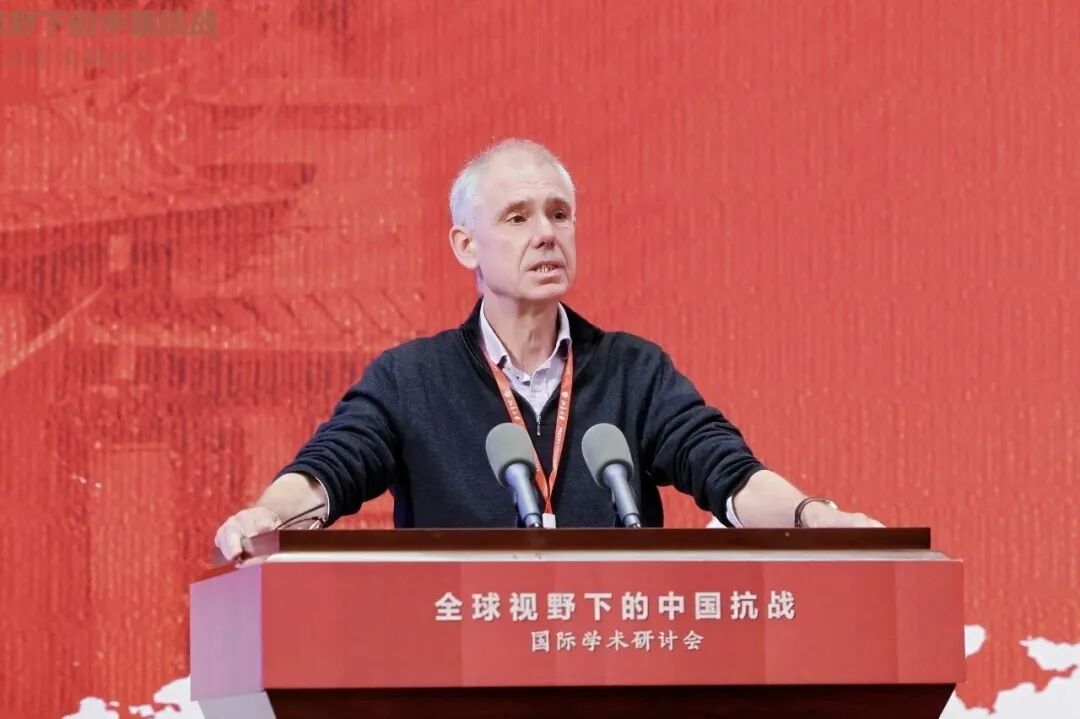
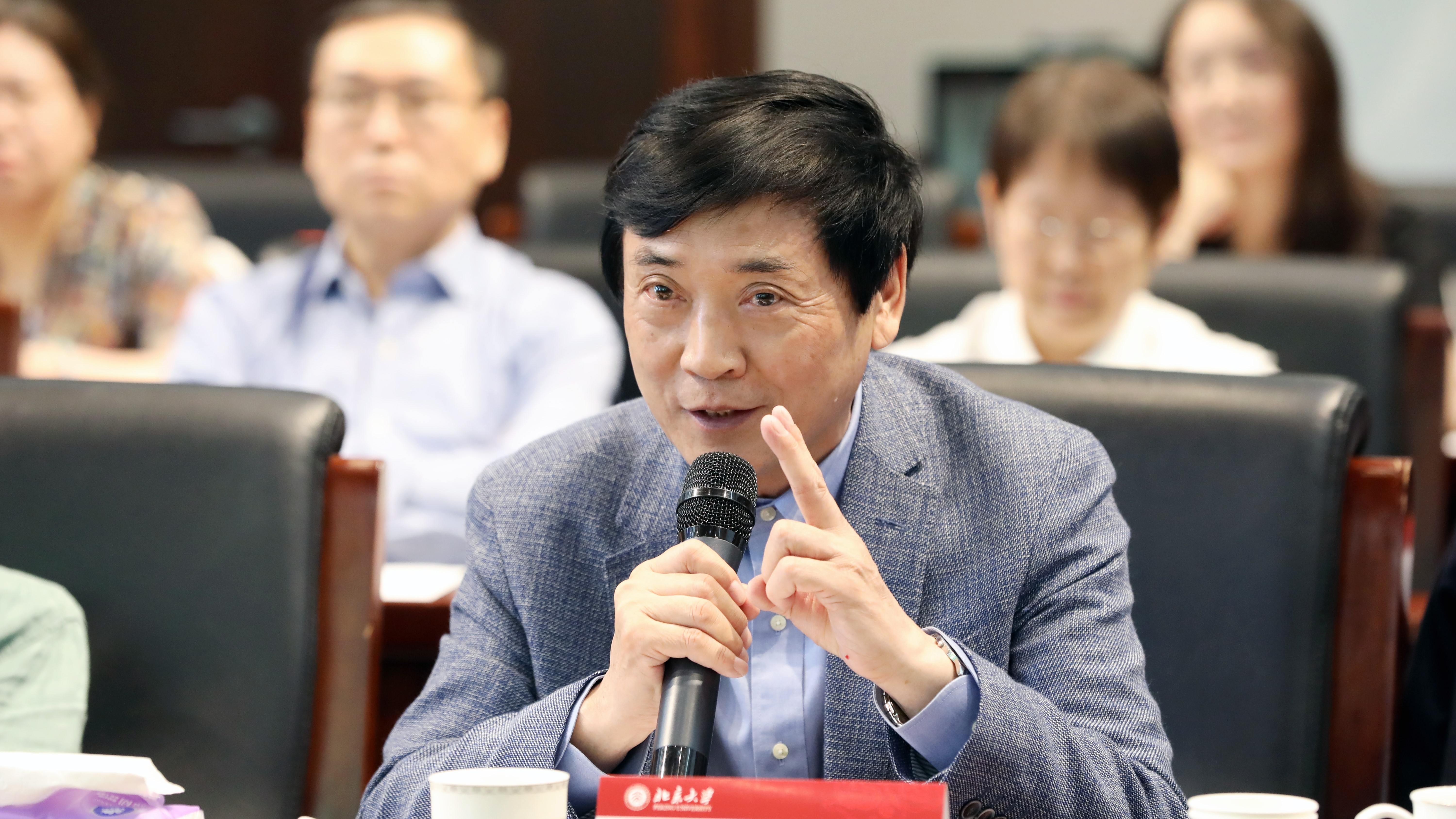
Hans van de Ven giving a presentation.
Van de Ven has shared close ties with PKU throughout his academic career. His first research visit was in 1986, when he accessed materials for his doctoral dissertation. In 2022, he was invited as a visiting professor by the PKU Department of History. He teaches courses on modern history, including “Asia in World War II”, and gives lectures that unveil the daily lives of Chinese people during the War.
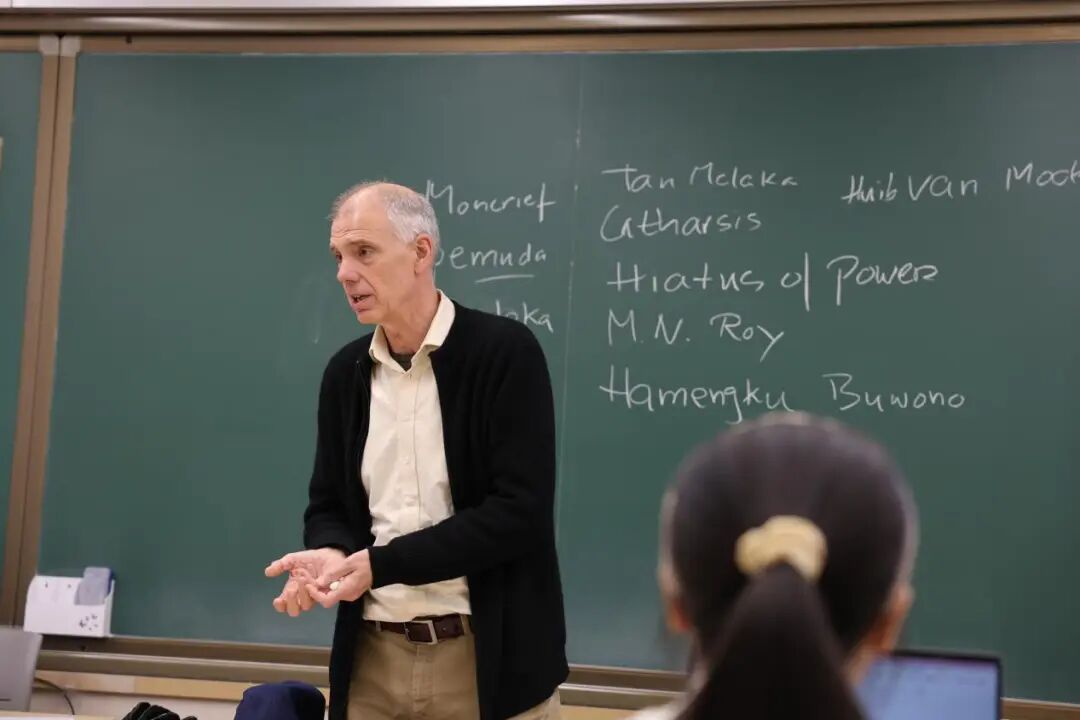
Hans van de Ven teaching at PKU.
From the banks of the River Cam to the shores of the Weiming Lake, he has remained alert to Western-centered narratives of World War II. He reminds his students that even after Japan’s surrender in 1945, warfare continued across many parts of Asia, hoping that more people can recognize these events as part of the War.
His influence has extended to generations of historians. Students like Rana Mitter, now a professor at Harvard Kennedy School, and Mitter’s student Jin Zhixia, a postdoctoral researcher at PKU, continue to explore China’s role in global history. In 2024, Van de Ven served on Jin’s dissertation committee, providing detailed feedback on both conceptual arguments and language use.
“I am at my happiest sitting in an archive or library in China, traveling across the country to deepen my understanding of places central to my research, or talking about Chinese history with colleagues and friends at a university in China,” he wrote. “There is something very special to see former students build up lives focused on China.”
Written by: Ma Xuan
Edited by: Wong Jun Heng, Chen Shizhuo
Source: PKU WeChat (
Chinese)