Peking University, January 15, 2026: Luo Fuli, a Peking University alumna from the School of Electronics Engineering and Computer Science, has built extensive experience in both the tech startup and research ecosystems. Her name has recently become associated with MiMo, Xiaomi’s first large language model (LLM).
As public attention grew, familiar labels such as “genius prodigy” quickly followed. Rather than stepping further into the spotlight, Luo deliberately took a step back.
In a social media post, she wrote: “Please leave me a quiet place on the Internet. I only want to work on difficult and right things in peace.”
For Luo, such labels obscure more than they reveal. “These titles make it seem as if success is innate; they overlook the effort, persistence, and full commitment behind research.”
“I’m not a genius,” she emphasized. “Curiosity about fundamental problems, solid execution, and a bit of stubborn resilience, that’s what brought me here.”
Luo had an ordinary upbringing in a small city, motivated to aim high and work hard from a young age by her parents’ liberal attitude toward education, a mindset that eventually led her to Peking University and prepared her for the arduous research journey ahead.
Luo spoke fondly of the research atmosphere at PKU. “The freewheeling environment where we would argue in hallways, then immediately run back to the lab to test our theories. This gave me a sense of spiritual ease.”
She also remembers a “golden corner” in the lab, a quiet spot hidden from view. “It’s where our supervisor could not see our screen,” she added. “It holds some of my most vivid memories from those years.”
During periods when experiments failed and progress felt stalled, her supervisor’s empathy left a lasting impression.
“In an environment where publications often define success, my supervisor cared more about the state of my research than results. That experience taught me that research isn’t just cold logical deduction; it’s also about human emotion, resilience, and collaboration.”

Photo source: Weibo
After entering the industry, Luo became involved in the development of MiMo at Xiaomi. For her, large models are not merely tools for language generation, but evolving systems that demand rigorous design, careful data treatment, and principled research direction. Her approach reflects a belief that progress in artificial intelligence should not be driven by trends or short-term breakthroughs, but by steady exploration of fundamental problems.
She recalled seeing a small child during a stroll with her juniors on PKU campus as the moment that reminded her of the yawning gap between AI’s capacity and the most basic human capabilities.
“A one-year-old baby may not be able to speak yet,” Luo said, “but through eye contact alone they can understand their parents’ emotions. This kind of intuitive awareness is something even the most advanced AI systems have yet to achieve.”
While large language models can learn from enormous volumes of text and master patterns in language and logic, Luo believes true intelligence is shaped through observation, feedback, and direct interaction with the physical world. That brief moment of reckoning has become a reminder that the future of artificial intelligence may depend less on words and more on learning how to experience the world as humans do.
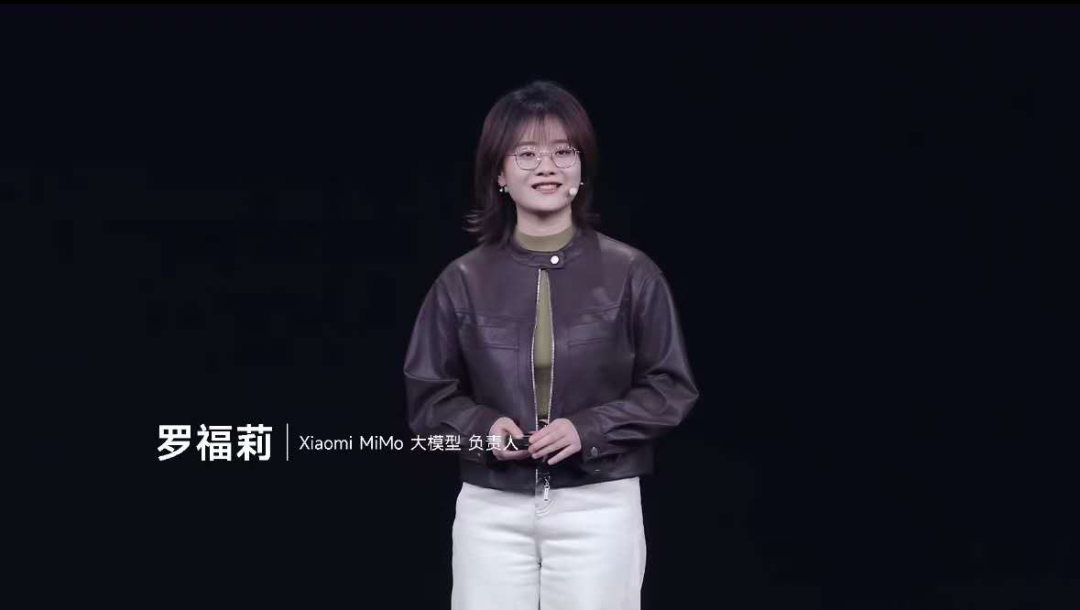
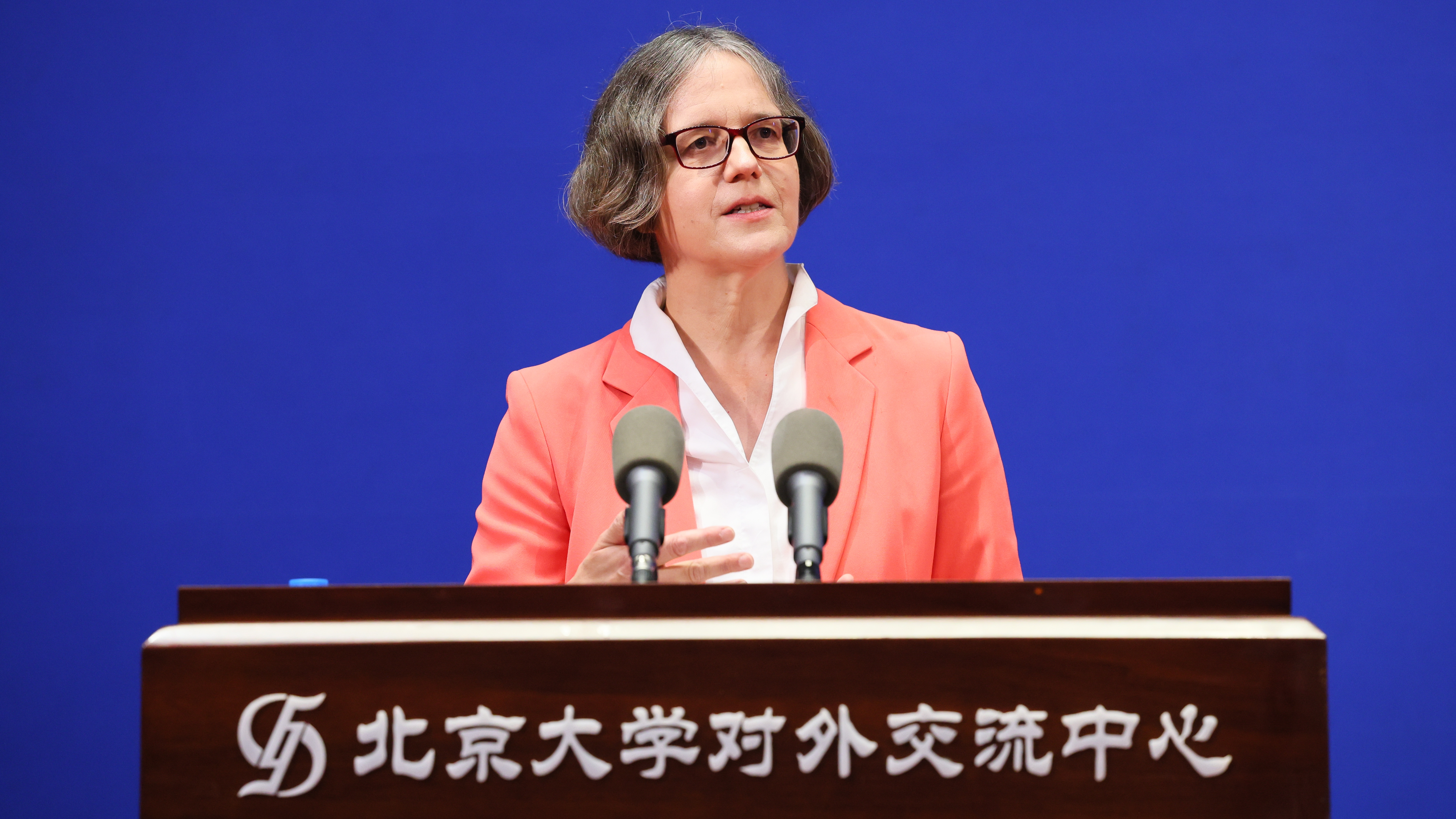
Luo Fuli appeared at a Xiaomi launch event as the leader of the MiMo LLM.
When asked about her long-term vision, Luo’s answer was calm yet ambitious. “Over the next decade, I hope to contribute to strengthening China’s scientific research capacity and helping Chinese research stand at the center of the global stage.” In her view, this is both an opportunity and a responsibility shared by her generation.
Written by: Nicole Angriawan
Edited by: Chen Shizhuo
Source: Beidaren WeChat (
Chinese)