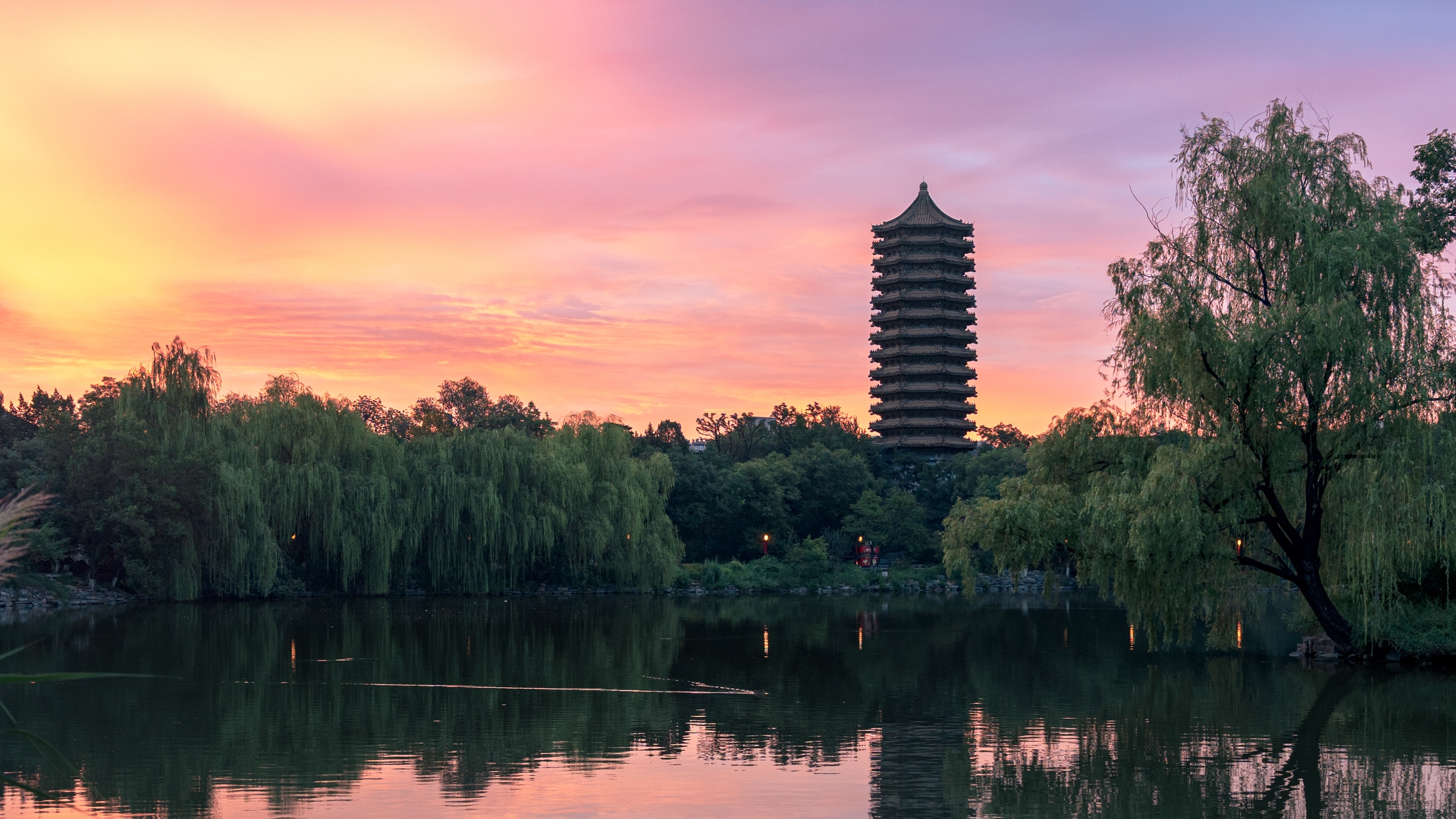
Editor's note: As green willows once again adorn the shores of Weiming Lake, Peking University (PKU) is heralding a brand-new graduation season, punctuated by the ubiquitous sight of caps and gowns. With graduation comes a moment of reflection, a look back at the cherished memories. In this series, international students of the Class of 2026 share their stories of growth and learning, as they gear up for a new chapter in their lives.
Peking University, July 8, 2026: Every year, the Chinese gaokao gives a thought-provoking essay prompt. It asks young people, standing at the edge of a new stage in life, to look beyond the examination room and reflect on the words, choices, and values that have shaped them, and the world they hope to shape.
This year’s prompt asked students to write about a word whose meaning had changed over time. When I read it, many words came to mind: home, ambition, growth. Each of them could tell part of my story, but none could capture my four years of undergraduate study at Peking University as fully as the word
敢当.
At Guanghua, the school I have been fortunate to call mine, this word is well-known. It is carved on the stone in front of the building, repeated in speeches by professors and deans, and embodied by the students around me. Roughly translated,
敢当 means “to dare”. But before I entered Peking University, I understood it in a simpler and perhaps more innocent way.
I come from Myanmar, raised by parents who gave me both freedom and courage. They supported my choices, encouraged my dreams, and made me believe that the world was full of possibilities. I also went to an international school, where I was taught to speak up, take chances, and trust myself. I learned to present ideas, defend opinions, and step into unfamiliar spaces. In that environment, courage was something I never lacked. The more impossible something seemed, the more I wanted to prove that I could do it.
In many ways, that belief carried me far. It brought me to China, to Beijing, and to Peking University. PKU is a place filled with students who topped the gaokao, those who had won national competitions, those who were disciplined, capable, and deeply driven. The thought of studying with them excited me. Coming from a country where there is still so much to build, I believed that PKU would sharpen this courage, and prepare me to one day contribute meaningfully to my country.
However, over four years at Peking University, the meaning of
敢当 changed. I began to understand that courage without consideration and action without accountability amount to recklessness. To dare is not simply to believe that one can do anything. It is to ask whether one should do it, and what consequences one must be ready to bear.
This realization did not come from a single moment. It came slowly, through the many lessons, encounters, and ways of thinking that PKU encouraged in me.
Education here was never limited to business formulas or management theories. In Guanghua and across PKU, learning moved between disciplines, from macro to micro. I encountered economics, history, psychology, archaeology, political thought, and social responsibility. We discussed markets, institutions, development, inequality, culture, and individuals. PKU also connected me with people from different backgrounds, countries, and life experiences.
Learning such demanding courses in a language that was not my own was intimidating, and so was studying alongside people who thought a layer deeper and moved a step ahead. There were moments when the dream I had once carried with such confidence suddenly seemed far more difficult to achieve. The world I had once believed I could move through freely began to reveal its weight, its complexity, and its limits.
It took both time and maturity for this pressure to turn into growth. Only later did I realize that PKU did not teach us to stop daring. It did not tell us to avoid risks, abandon ambition, or choose the easiest path. Instead, it taught us to pause, compare, and understand before rushing forward. Through economic theories of utility optimization, mathematical models, data-driven decisions, and even the limitations of all three, I learned that good intentions, passion, and courage are not enough. Real change requires knowledge, patience, and the willingness to recognize limitations.
The meaning of
敢当 has therefore changed for me. To dare is beautiful. But to dare while knowing what one is responsible for — that is what Guanghua, and PKU as a whole, have taught me.
That is the
敢当 I now understand. That is the
敢当 I hope I continue to live by.
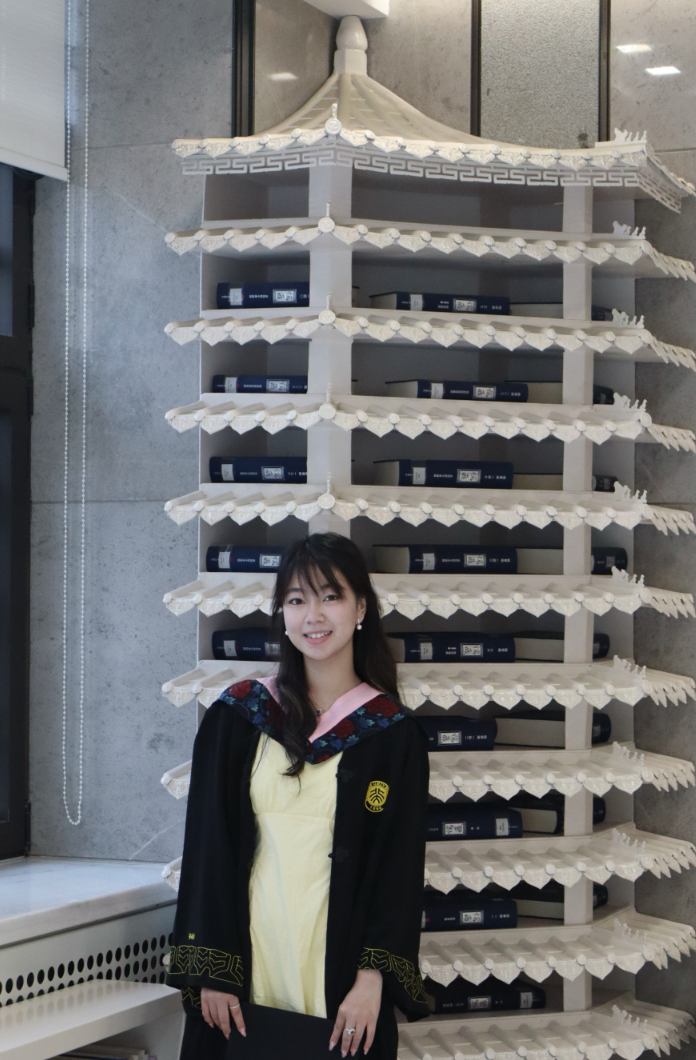
Written by: May Thu Htet
Edited by: Chen Shizhuo
Photos courtesy of the author