 Peking University, December 9, 2025
: A research team led by Professor Lu Lin from the Peking University (PKU) Sixth Hospital has recently provided a comprehensive overview of sleep health in China, identifying prevalent causes of sleep disturbance and suggesting policy directions to promote better sleep. Their research paper, titled “Sleep health in China: status, challenges, and promotion strategies,” was published in
The Lancet Public Health earlier in early November this year.
Why it matters
Sleep is essential to both physical and mental health and to the functioning of society as a whole. But as modern life grows more demanding, sleep problems are increasingly recognized as a major public health challenge across the world. In China, poor sleep health, an unfortunate by-product of rapid societal transformation and urbanization, is exacting an ever heavier toll on its vitality, costing 115 million years of life and US$628.15 billion in 2018 alone. Thus, promoting sleep health is of critical importance and has been elevated to a national strategy.

Figure 1. Risk factors for, and effects of, sleep disturbance in China.
Key Findings
The research indicates that as insomnia and obstructive sleep apnea (OSA) are becoming prevalent, challenges for remedy mainly fall into two categories. The first one includes deep-seated social issues, such as the ruthless competition culture known as “neijuan”(内卷), an ageing population and its attendant geriatric health complications, and insufficient public awareness of sleep health. The second category stems from systemic limitations—uneven distribution of medical resources and weak healthcare infrastructure.
In response, China has implemented multifaceted strategies to promote sleep health, especially through the Healthy China 2030 framework, which includes policies that seek to relieve the burden on students and the workforce, enhance the clinical capacity of the healthcare system to cover sleep issues, and shore up sleep-related research.
Furthermore, the research has also proposed 4 directions for future policies. They include transforming socioeconomic and cultural norms for better sleep health; enhancing public awareness via digital health communication; strengthening the healthcare system capacity and integration; and building national research and technological infrastructure.
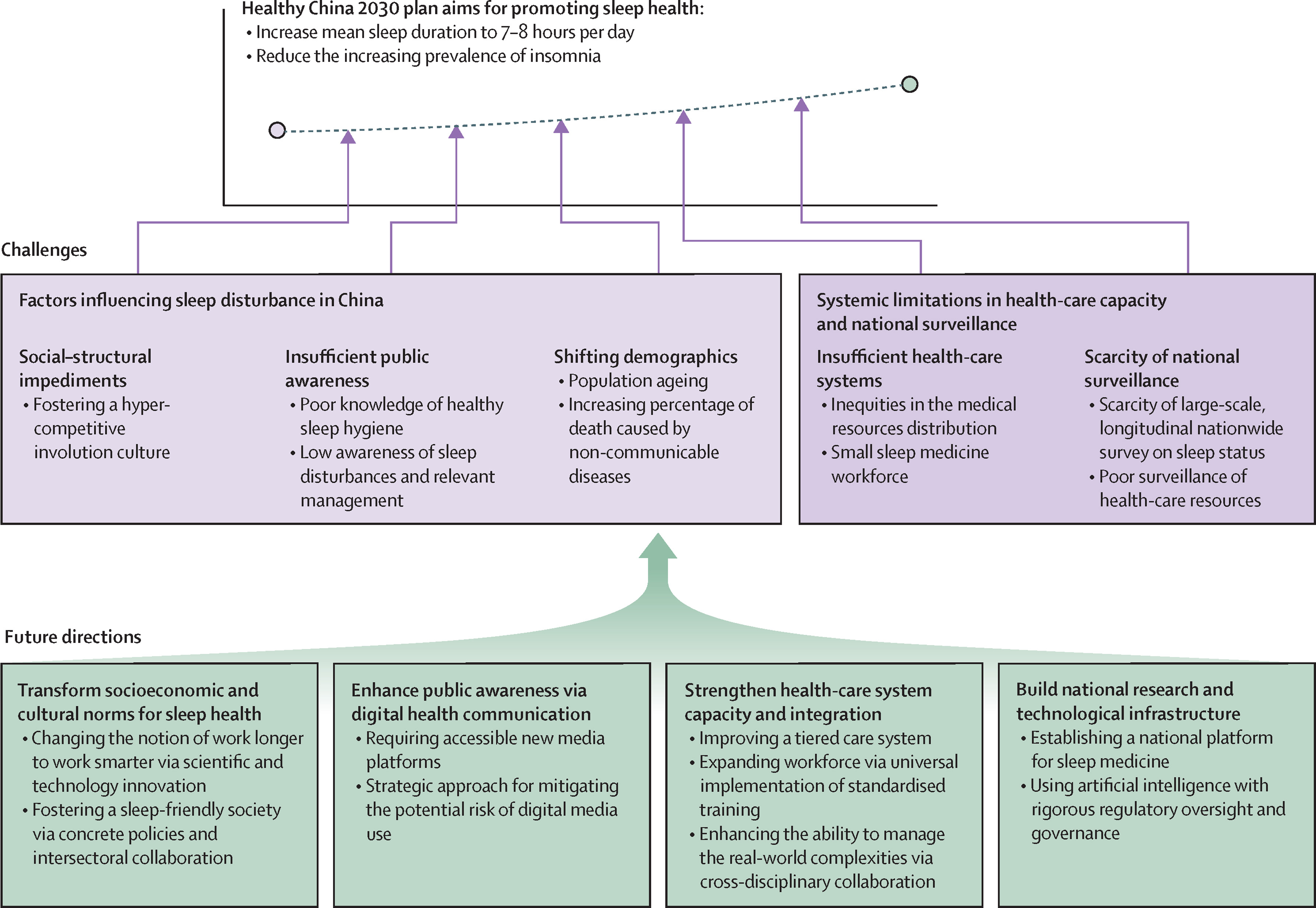
Figure 2. Challenges and future directions for sleep health in China.
Future Implication
The publication of this research has provided important guidance for advancing sleep health in China and supports the development of effective public health strategies.
*This article is featured in PKU News "Why It Matters" series. More from this series.
Read more: https://doi.org/10.1016/S2468-2667(25)00250-6
Written by: Lim Jo Min
Edited by: Chris Tang Xiao Tong, Chen Shizhuo
Source: PKU News (
Chinese)