Peking University, May 14, 2026: "Through this experience I believe Peking University Third Hospital not only has competent medical care, but also shows a genuine concern for the care of their patients," said 74-year-old American senior citizen Peter (pseudonym).
On April 21, as the last leg of his China trip, he came to the Special Needs Clinic of the International Medical Department of Peking University Third Hospital (PKUTH) with an English thank-you letter and a silk banner to express his gratitude to the medical staff. Recalling the life-and-death race against time he experienced at the hospital two months ago, he was filled with emotion.
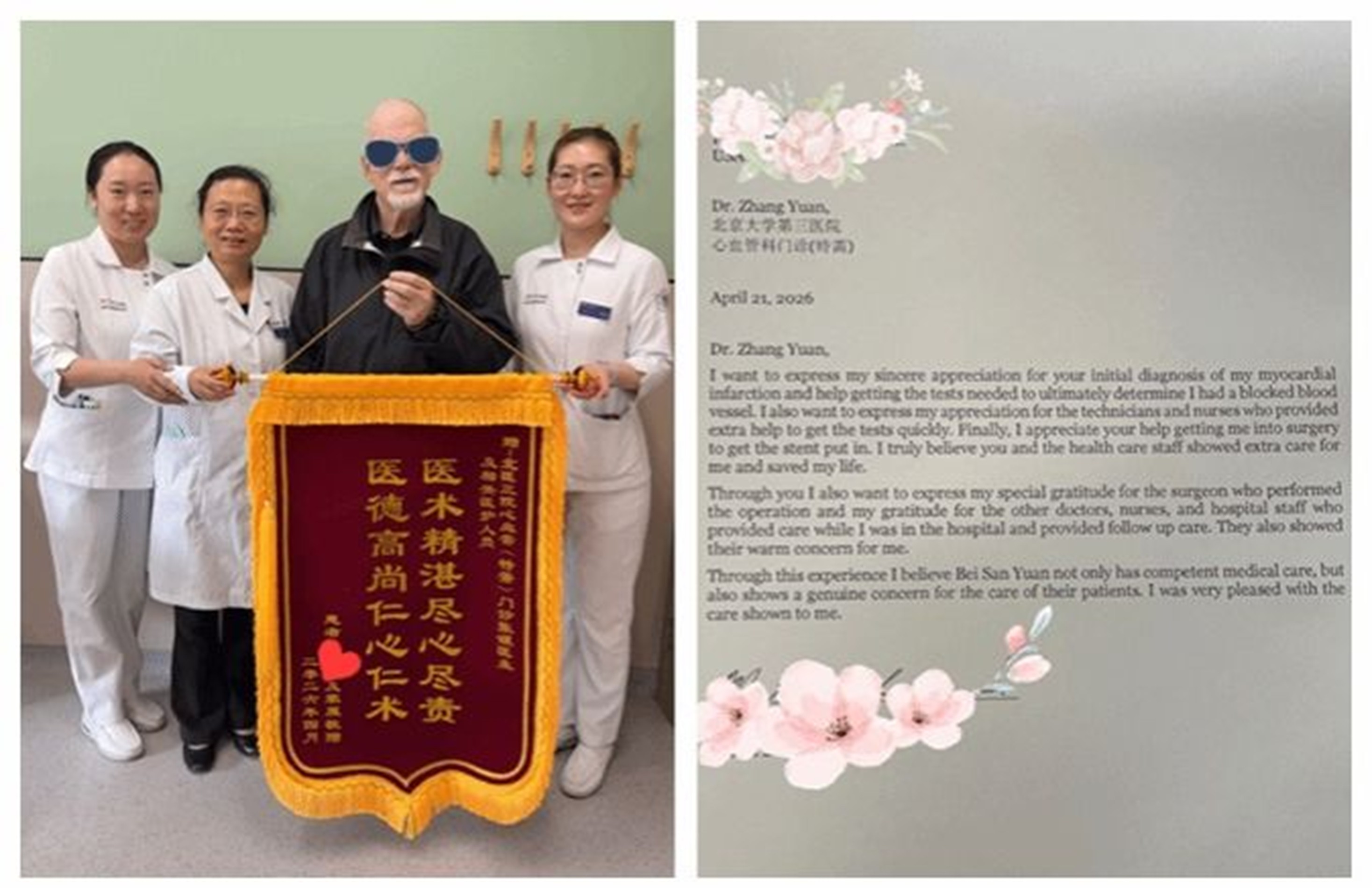
Peter holding a silk banner (left) and his letter (right) thanking PKUTH.
Peter stated that he arrived in China from New Zealand in January this year. One week later, he developed a cough and right-sided chest pain. His symptoms eased somewhat after taking medication for an upper respiratory tract infection. He experienced episodes of chest pain in early February and on the night before admission, both of which resolved spontaneously.
On the day of his in-person consultation at PKUTH, Chief Physician Zhang Yuan quickly recognized the urgency of his condition and promptly arranged for Peter to receive an electrocardiogram. The results indicated an acute anterior myocardial infarction with significant ST-segment elevation. Dr. Zhang assessed that Peter was at imminent risk of ventricular fibrillation or cardiac arrest. In accordance with the emergency rescue protocol for critical and severe outpatient cases of the hospital, she immediately organized emergency treatment. Subsequently, an echocardiogram confirmed the diagnosis of acute myocardial infarction.
The core tenet of cardiology is that the earlier blood vessels are recanalized, the less myocardial necrosis occurs. She immediately called Chief Physician Wang Yupeng, the on-call emergency doctor of the Cardiology Catheterization Laboratory for the day. After assessment, the medical team decided to transfer Peter to the catheterization laboratory without delay.
Emergency coronary angiography was performed immediately. The results revealed subtotal occlusion of the proximal left anterior descending artery, with nearly interrupted blood flow. Wang Yupeng promptly decided to perform emergency interventional therapy on Peter. From vascular puncture to successful recanalization of the blood vessel, the entire procedure merely took ten minutes.
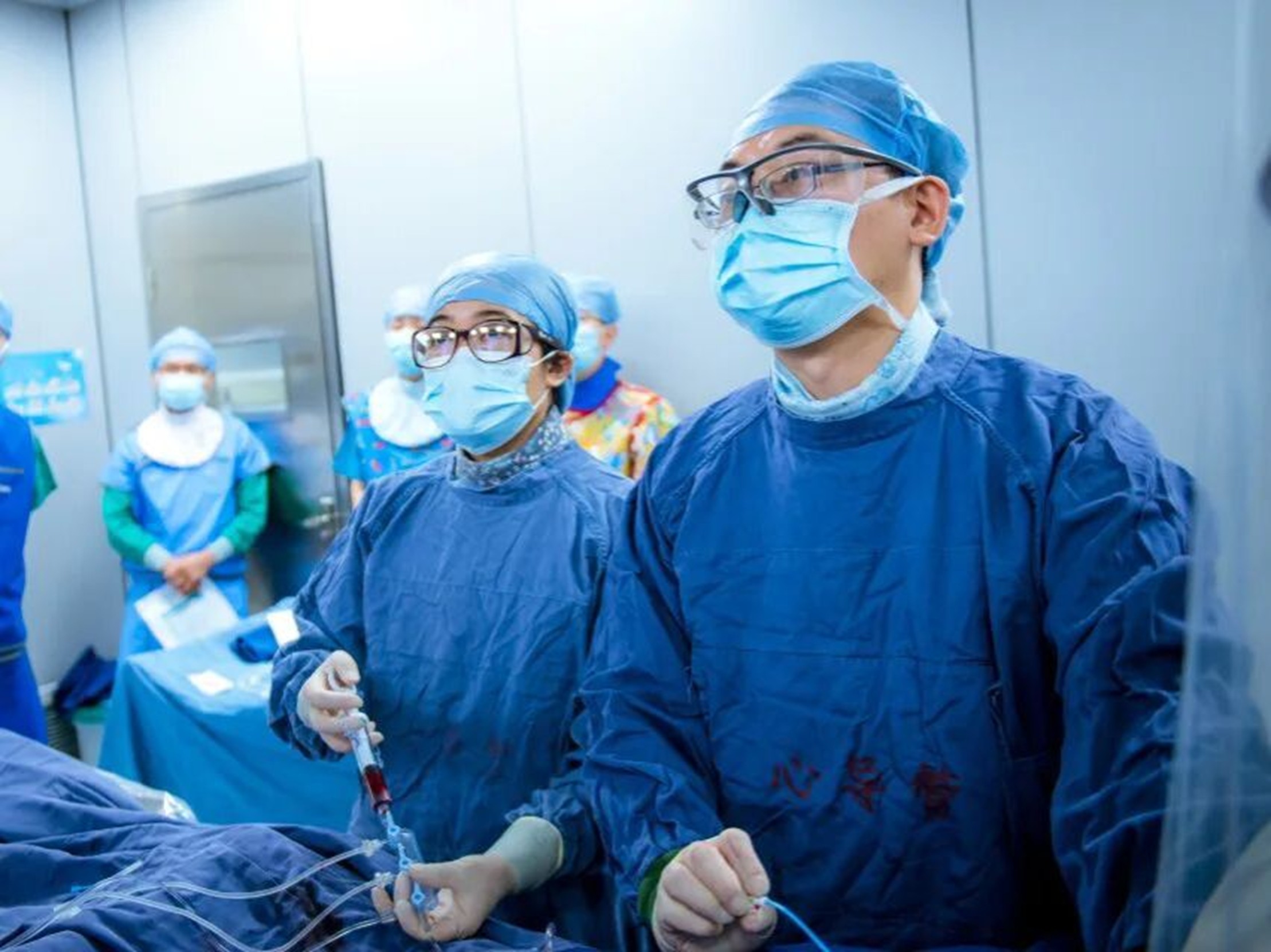
Doctors operating in Peter's surgery.
After the procedure, the patient was transferred to the Coronary Care Unit (CCU) for observation. Once his condition was stabilized, he was moved to a general ward of the Department of Cardiology and discharged four days later. Prior to discharge, re-examination with cardiac ultrasound and electrocardiogram showed essentially normal findings. No significant myocardial necrosis was detected, and the patient’s cardiac function returned to normal.
This successful rescue served as an epitome of the efficient operation of the emergency and critical care channel at PKUTH. From rapid identification and emergency management in the outpatient department, to seamless connection with the catheterization laboratory and precise interventional treatment, the whole process was closely linked and time-critical. It fully demonstrated the hospital's well-established emergency rescue system, professional expertise, and efficient multidisciplinary collaboration capabilities.
Written by: Wu Zhaoxia
Edited by: Liu Xin, Chen Shizhuo
Source: Peking University Third Hospital (
Chinese)