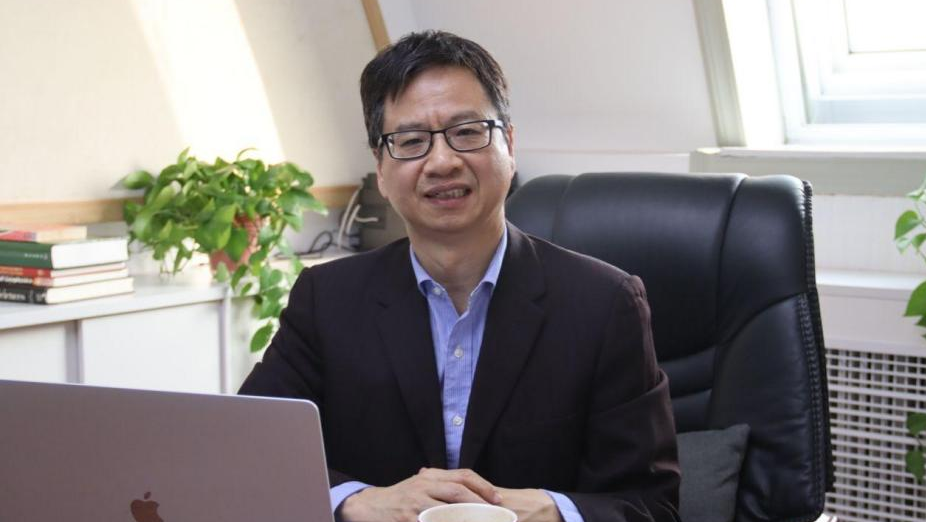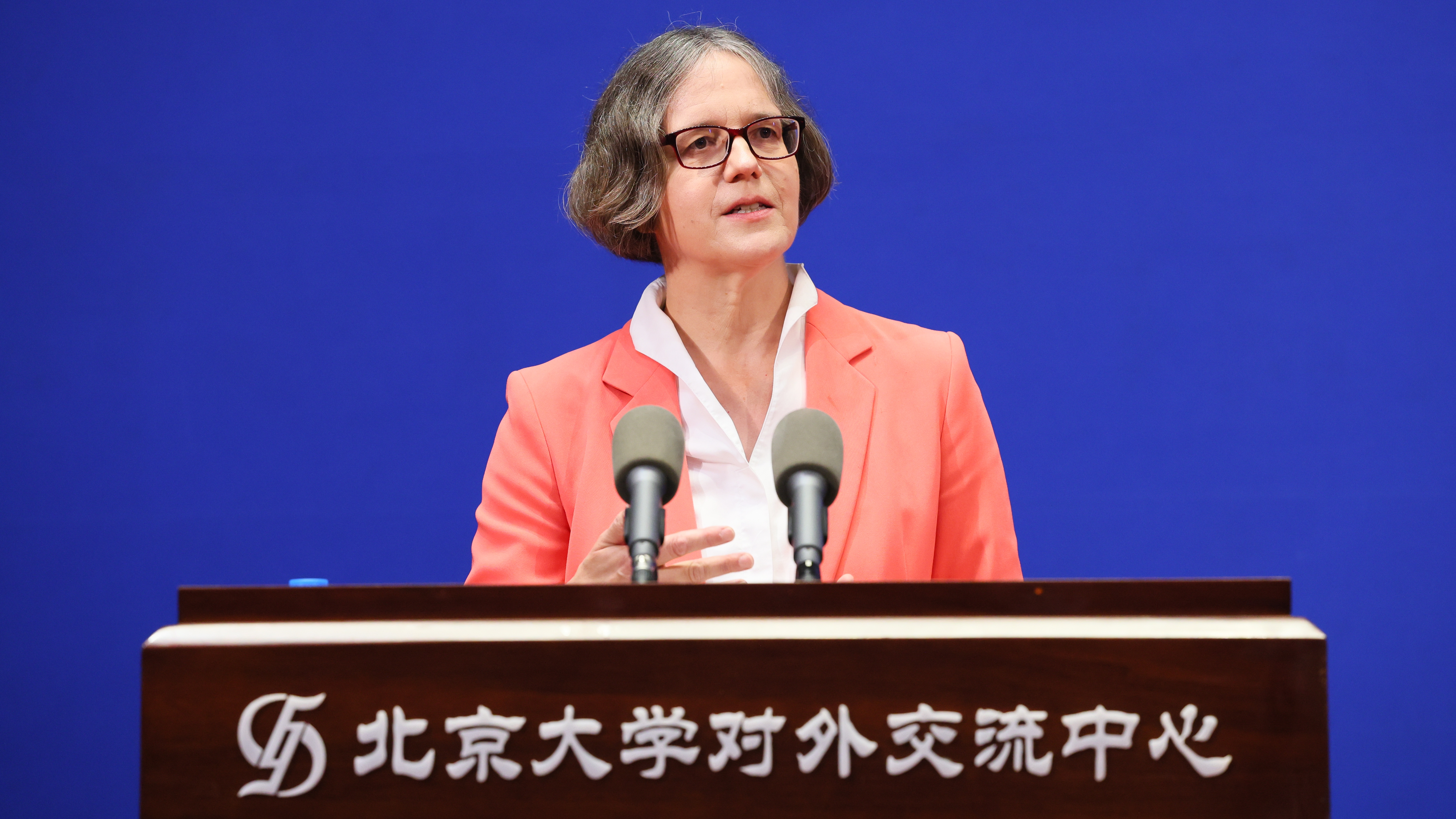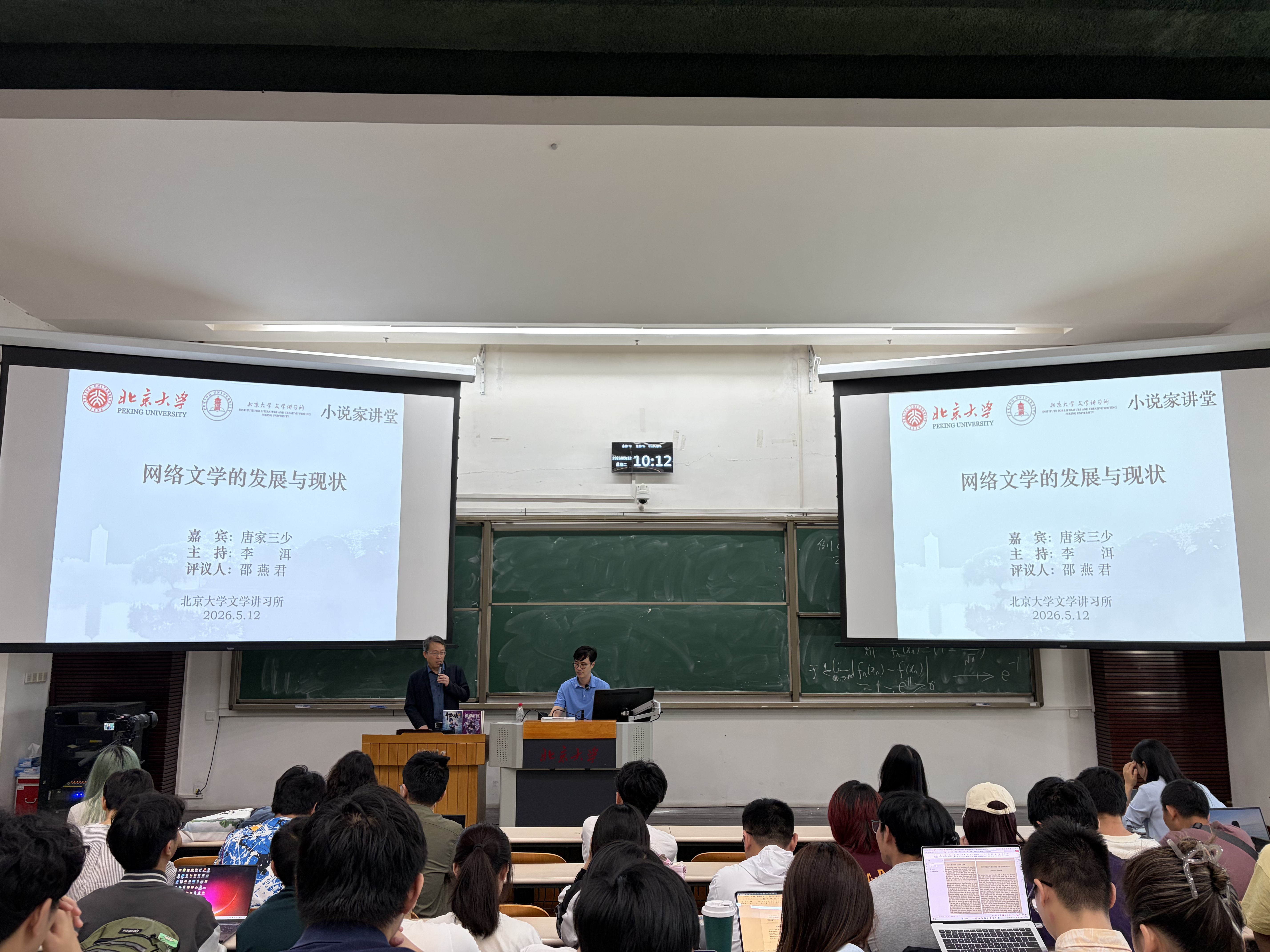
Tang Jia San Shao delivers a lecture at Peking University.
Peking University, May 18, 2026: As artificial intelligence rapidly enters content production, how writers should respond to technological change has become an increasingly important question for literature and the wider cultural and entertainment industry.
In a lecture held on May 12 at Peking University, Zhang Wei, better known by his pen name Tang Jia San Shao (唐家三少), shared his reflections on the online literature industry, AI-assisted writing, and the future path for young writers.
Tang Jia San Shao began writing in 1998. His major works include Child of Light, The Kind Death God, Magic Chef of Ice and Fire, Mad God, The Twelve Zodiac Guardian Gods, Wine God, Zither Emperor, Heavenly Jewel Change, and the Soul Land / Douluo Dalu series. From 2008 to 2012, his accumulated royalty income reached RMB 33 million, placing him among China's highest-earning online writers. In 2025, he was elected chair of the Beijing Writers Association–Online Writers Branch.
Looking back on his early writing experience, Tang Jia San Shao said that he first wrote simply "for the love of it." His commitment to frequent updates came from a simple wish: to let readers see his work every day.
However, he also pointed out that online literature and its related entertainment sectors are now in flux. AI technology is changing the way content is produced.
Tang Jia San Shao described 2024 as an important turning point in the widespread use of AI. Although more AI-generated texts are entering the market, he said such works are still "easy to identify." For this reason, he does not advise writers to rely directly on AI to complete literary works. At the same time, he "absolutely encourages" the use of AI as an auxiliary tool, for example, in searching for background materials.
On the question of whether writers will be replaced in the age of AI, Tang Jia San Shao argued that artificial intelligence can imitate, but genuine creativity and imagination remain important strengths of human authors.
He observed that scriptwriting, because of its more formulaic structure, may be more vulnerable to AI's impact. Yet he emphasized that "good content will never be replaced."
In the future, online literature platforms may increasingly become broader entertainment platforms, where authors provide stories, and AI helps generate certain derivative forms of content, improving the speed and efficiency of updates and adaptation.
For young people interested in entering the online literature industry, Tang Jia San Shao's advice was direct: "Start writing, and do not overthink it."
He stressed that professional writing is far from easy. Writing consumes both mental energy and time, and it requires long-term commitment. What matters most, he said, is to revise constantly, update continuously, read others' work, and reread one's own.
In an era when AI is reshaping the content industry, Tang Jia San Shao's answer is not to reject technology, but to return to the essence of writing.
For Tang Jia San Shao, even if AI may one day replace certain writing techniques, it still cannot replace what lies at the heart of fiction: imagination, storytelling, and the ability to move readers.
Reported by: Leow Kai Lim
Edited by: Chen Shizhuo
Photo by: Leow Kai Lim