Peking University, June 4, 2026: On May 28, experts from Peking University Shougang Hospital (PKUSH) performed a pancreaticoduodenectomy using a domestically developed single-port surgical robot. The procedure allowed Professor Laurent Sulpice, head of the Hepatobiliary and Digestive Surgery Department at Rennes University Hospital in France, and his delegation to experience China’s minimally invasive surgical prowess up close. It offered a window into domestically developed surgical robots in China.

Pancreaticoduodenectomy is nicknamed the “Mount Everest” of abdominal surgery due to intricate anatomical structures, the extent of resection, the technical demands of anastomosis and confined operative field, all of which render the procedure extremely challenging. Led by Director Leng Jianjun, the Department of Hepatobiliary and Pancreatic Surgery at PKUSH has been among the first in China to administer complex single-port robotic hepatobiliary-pancreatic surgeries, placing itself at the forefront of technological innovation.
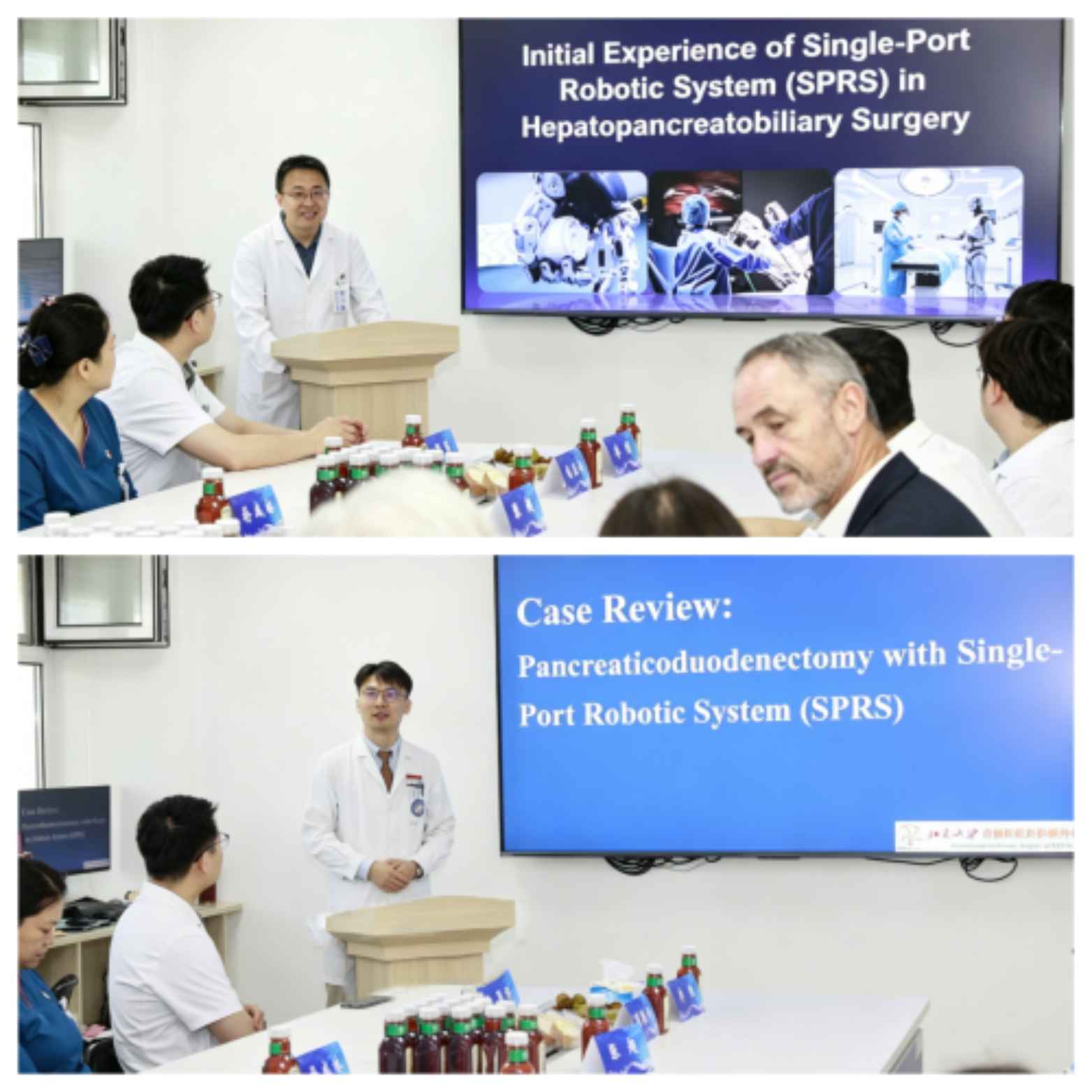
During the exchange, Dr. Leng Jianjun, vice president of the hospital and director of the Department of Hepatobiliary and Pancreatic Surgery at PKUSH, and Professor Sulpice each presented an overview of their respective institutions. The visit was structured in three progressive sessions: case discussions, ward rounds and live surgery observation. Shifting from paper-based clinical data to real-world operations, and from discipline development to patient-centered humanistic care, the French specialists spent a full day conducting an in-depth review of the department. Their exchanges ultimately centered on the clinical application and future prospects of single-port robotic surgery in hepatobiliary and pancreatic specialties.
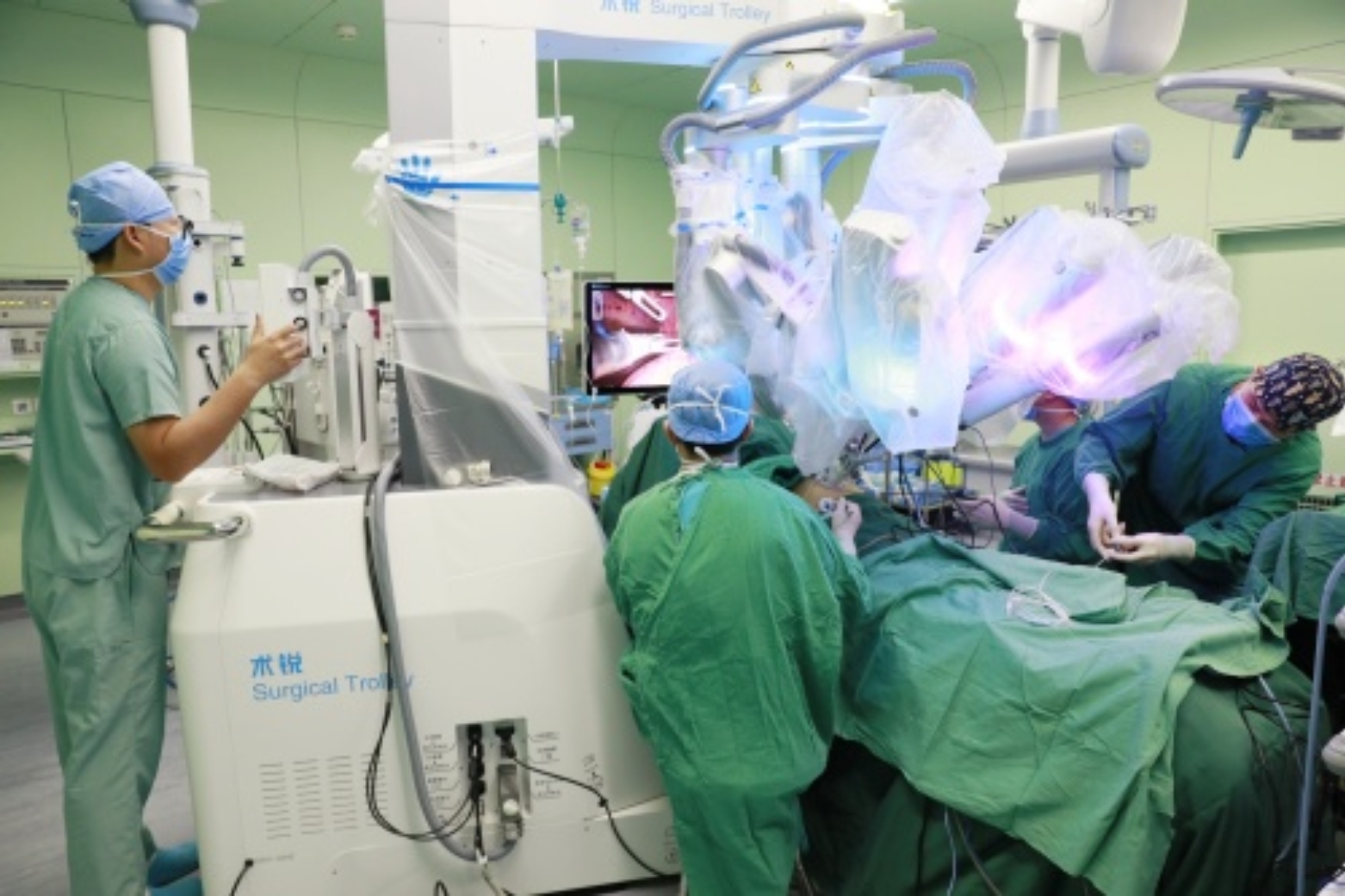
The highlight of the event was the live observation by the French experts of a technically demanding pancreaticoduodenectomy performed with a domestically developed single-port surgical robot. Leveraging the high-definition 3D vision and bionic robotic arms of the homegrown single-port robotic system, Dr. Leng Jianjun’s team carried out precision manipulations on the millimeter level inside the patient’s body. Professor Sulpice commented that the visit allowed him not only to witness state-of-the-art surgical techniques, but also to gain a full picture of a modern, standardized and patient-centric surgical center.

After leaving the operating room, Chinese and French experts held candid discussions on technical specifics, future development directions and existing challenges concerning wider clinical adoption of single-port robotic surgery in hepatobiliary and pancreatic disciplines. More importantly, the two sides also discussed possible cooperation in technology exchange, joint research and talent training, which could lead to more academic achievements and clinical breakthroughs going forward.
Written by: Wu Zhaoxia
Edited by: Liu Xin, Chen Shizhuo
Source: Peking University Shougang Hospital (
Chinese)