 Peking University, July 18, 2026
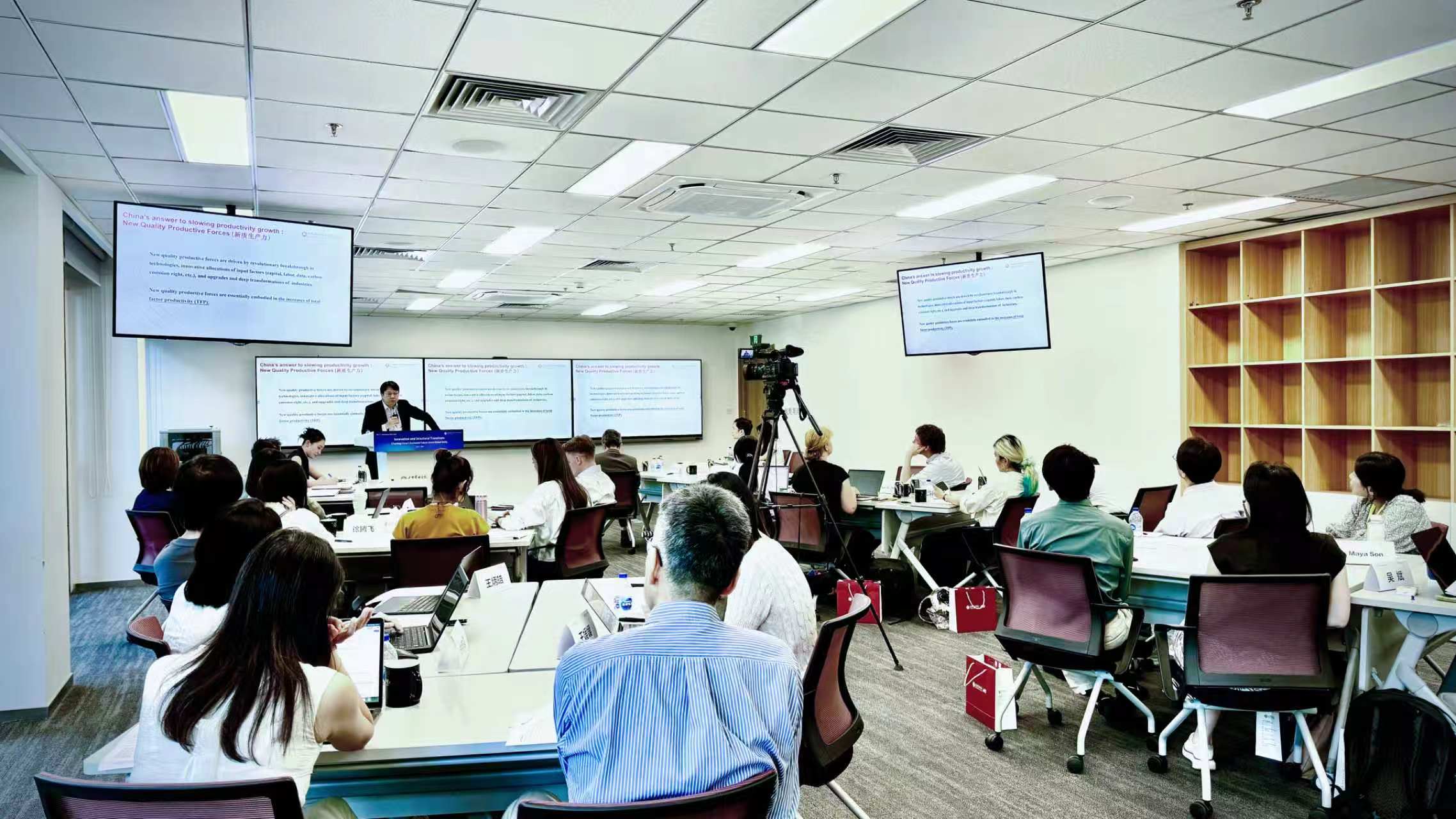
: On July 17, Peking University Guanghua School of Management (PKU Guanghua) hosted the 11th International Media Salon in Beijing. Liu Qiao, Boya Distinguished Professor of Peking University and the Former Dean of Guanghua School of Management; Tang Yao, Associate Professor of Applied Economics at Guanghua School of Management and Vice Director of the Center for Management Science at Peking University; Han Pengfei, Associate Professor of Finance at Guanghua School of Management, shared their insights on China's evolving R&D paradigm, the role of AI and human capital in reimagining economic policies, and the structural transformation of domestic services and global manufacturing.
Nearly 30 journalists and representatives from over a dozen international media outlets and institutions participated in the event and engaged in in-depth discussions.
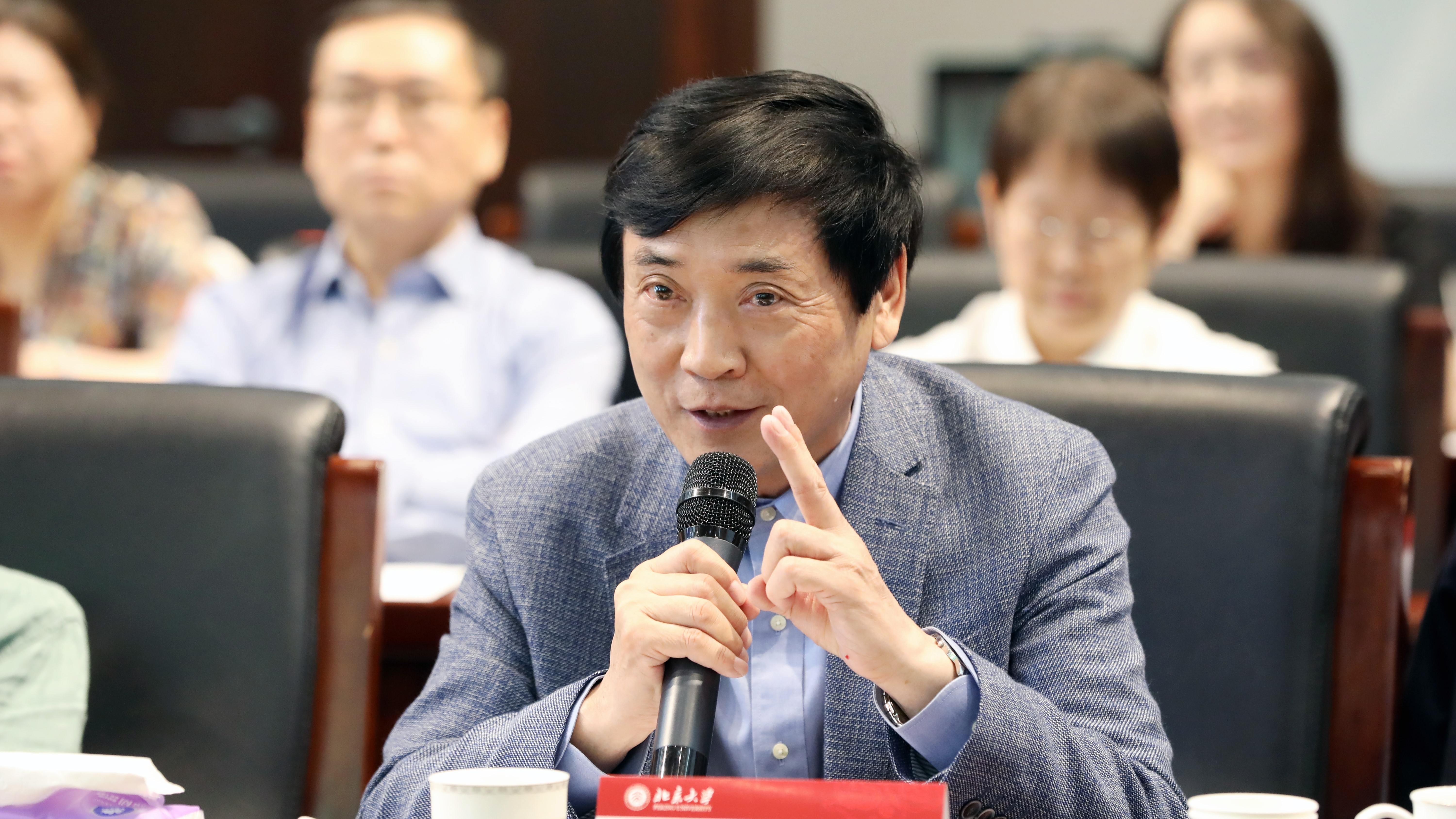
Professor Liu Qiao said the focus of investment is expected to gradually shift from traditional areas such as infrastructure and fixed assets toward human capital, healthcare, education and other service sectors. He said this represents a major change in the understanding of the future drivers of China’s economic growth.
Liu pointed out that China's next phase of growth will hinge on both the development of AI-driven future industries and productivity gains in traditional sectors such as services, healthcare, education and finance. While AI is expected to become an important source of productivity growth, he noted that AI-related industries account for only about 17 percent of the economy. The greater challenge, he said, is how to boost productivity across the remaining 83 percent of the economy.
Liu said that China is caught in a cycle of low prices, low profits and weak income growth, as a structural imbalance between supply and demand has intensified price competition, squeezed corporate profits and constrained wage growth, ultimately weighing on household consumption. Breaking this cycle, he said, will require raising household incomes and shifting consumption toward higher-value services.
How should the success of the government's "Investing in People" strategy be measured? Liu noted that policymakers should look beyond GDP growth as the primary performance indicator for local governments and place greater emphasis on household income and consumption. He also called for a reorientation of macroeconomic policy, suggesting that fiscal and monetary measures should gradually shift their focus from boosting production and manufacturing to strengthening consumption and domestic demand.
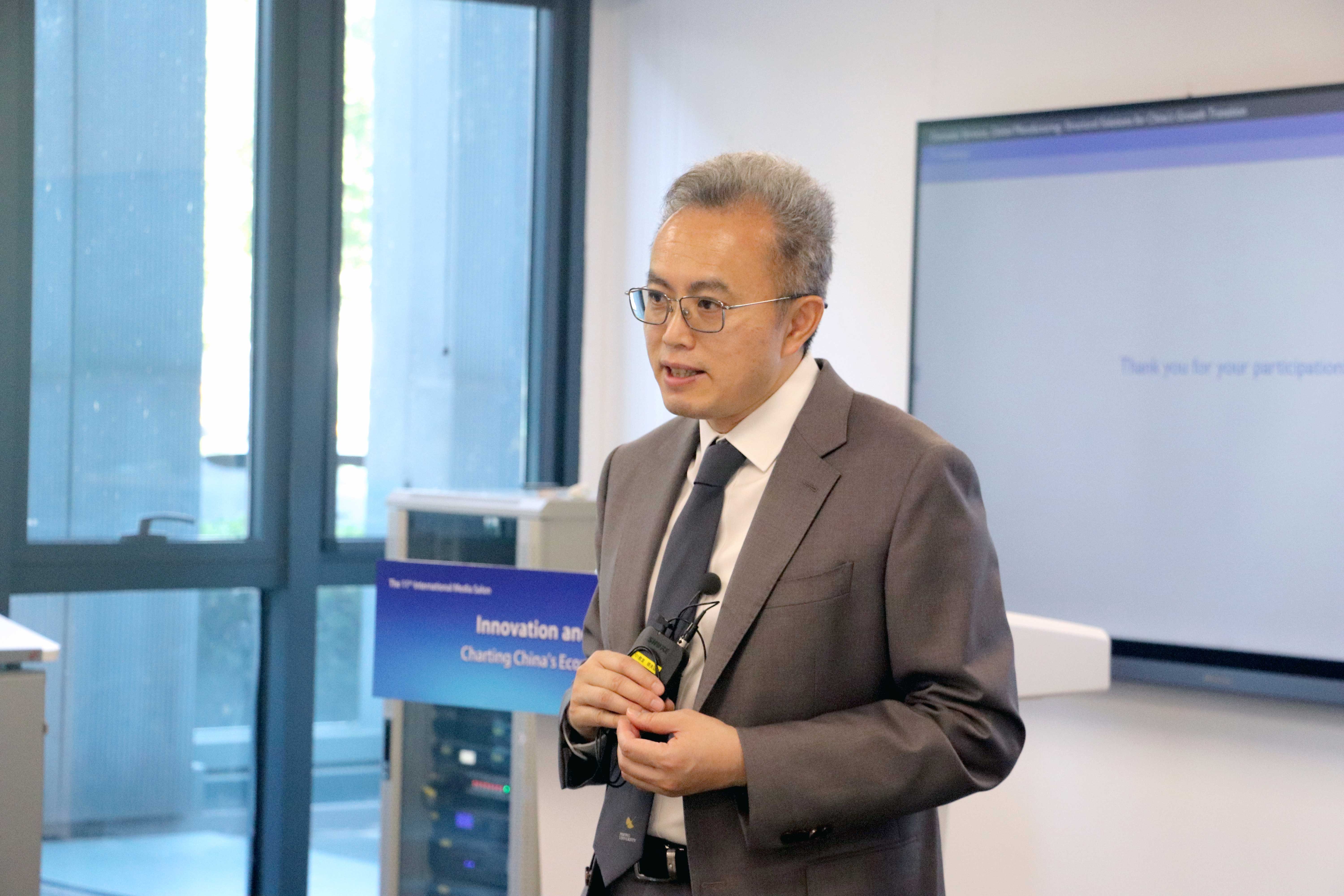
Professor Tang Yao examined the structural challenges facing China's economy and explored pathways toward more sustainable growth.
Tang pointed out that China is working to address the structural imbalance between strong supply capacity and relatively weak demand. To achieve sustainable growth, he suggested that the service sector should focus on expanding service consumption, while the manufacturing sector should actively participate in the restructuring of global manufacturing networks.
He argued that China's current level of goods consumption is relatively reasonable and, in some areas, has reached a stage of saturation. As a result, future consumption growth is likely to come primarily from the service sector. In addition to leveraging major events such as concerts and sporting events to boost service consumption, he said it is equally important to encourage the entry of small businesses to foster a more diverse range of services. He also emphasized the need to implement the policy initiative of "Investing in People" including expanding and improving services in key areas such as healthcare and education, which could create new sources of consumption growth.
Despite growing global uncertainty, Tang noted that China's manufacturing sector is becoming more deeply integrated into the global economy rather than decoupling from it. He said China's expanding manufacturing capabilities have strengthened its role in global supply chains, while its growing industrial capital and production capacity are increasingly being deployed overseas.
Looking ahead, Tang said China could also provide integrated solutions for countries seeking to build more diversified and resilient supply chains. For example, in pursuing the energy transition, China can offer integrated packages of renewable energy infrastructure, power grid technologies and new energy vehicles.
"We are not going back to globalization as we once knew it, but we will continue to have a global industrial system, and China will remain a major part of it. The sooner Chinese companies adapt to this reality and seize the opportunities it presents, the better," he concluded.
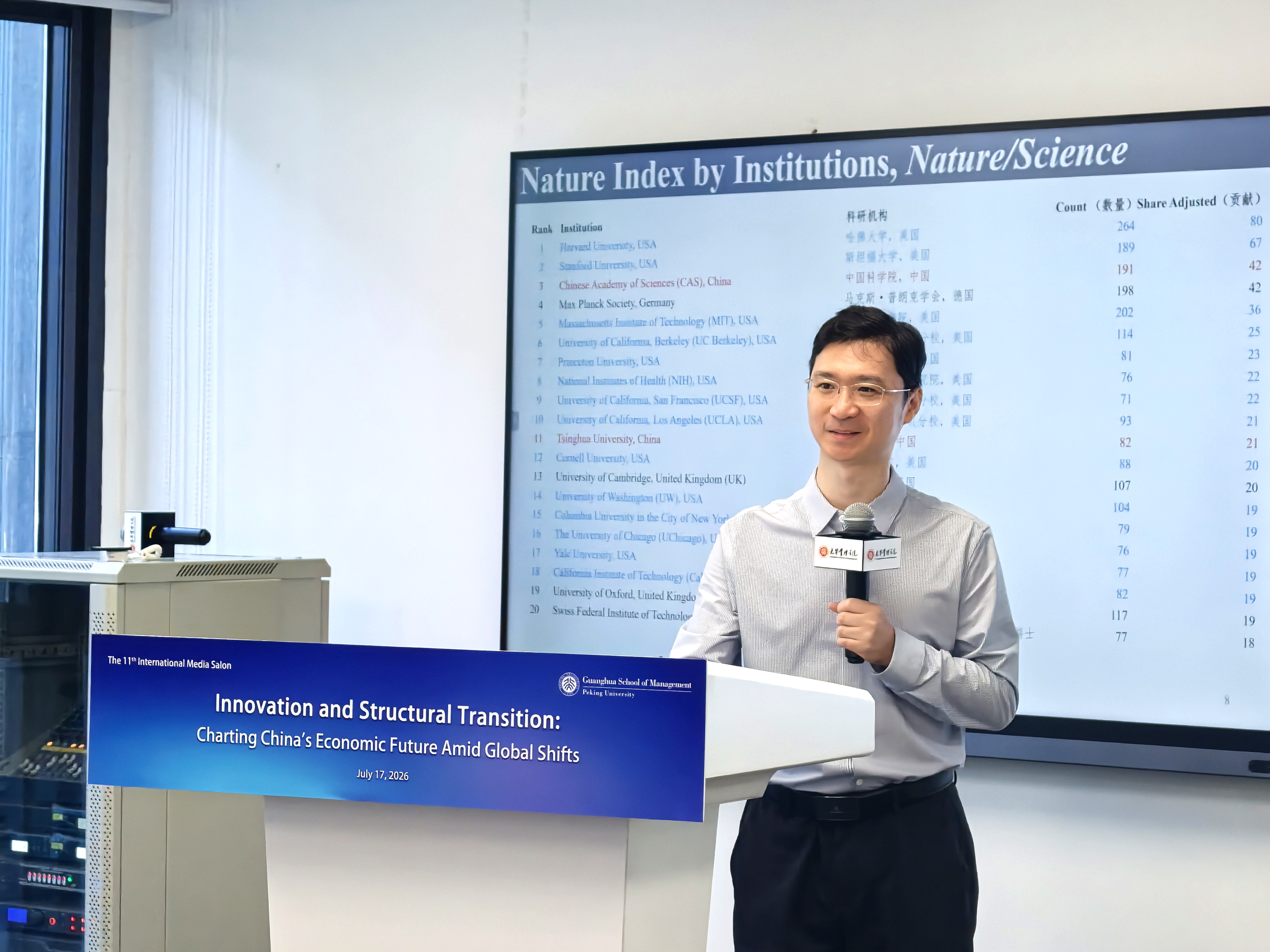
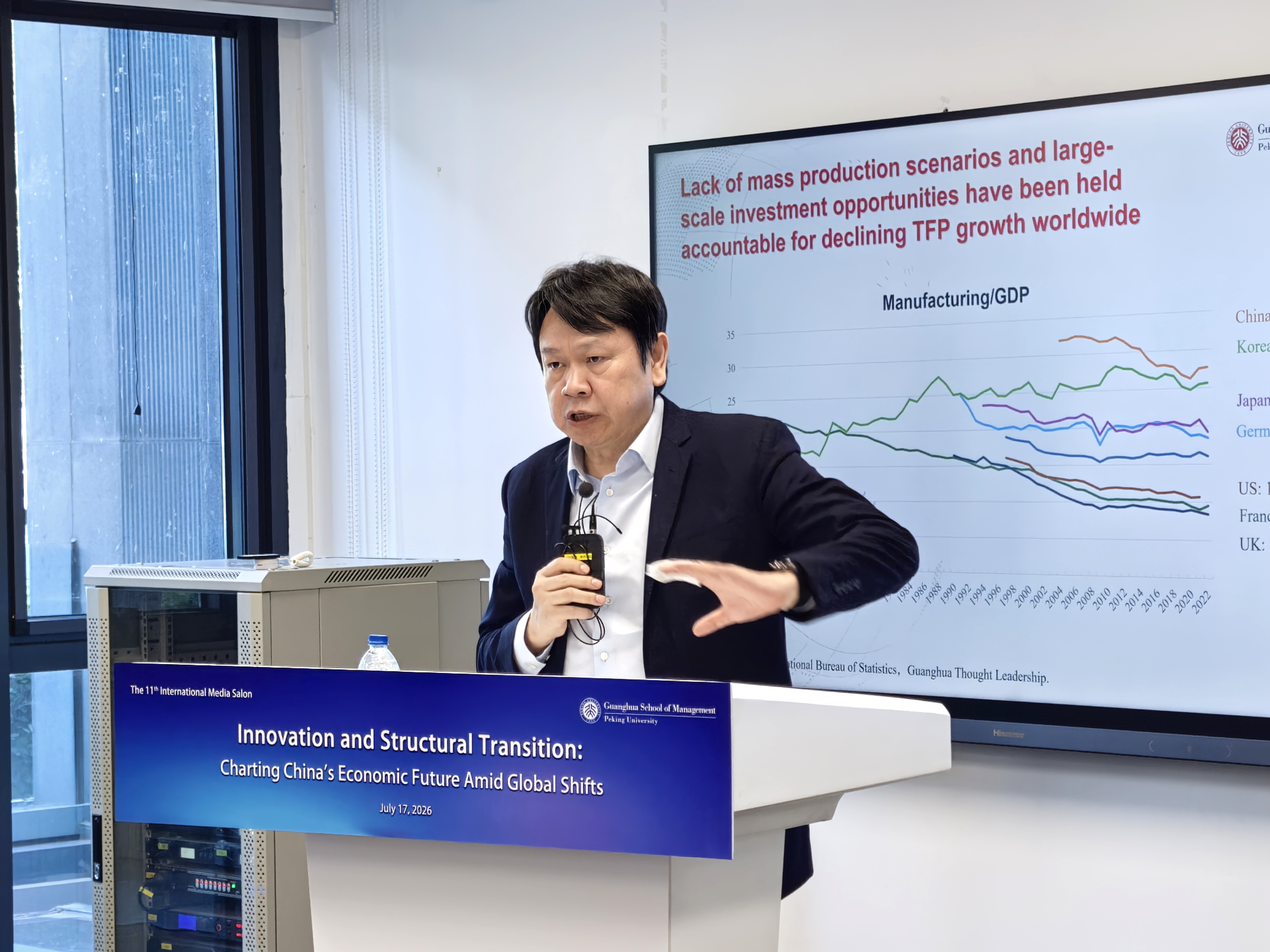
Professor Han Pengfei noted that China has demonstrated remarkable resilience amid global geopolitical tensions, leveraging a renewable energy transition that fuels both domestic growth and the global green shift. He highlighted China's expanding role as a global investor, pointing out that the country surpassed Japan in 2025 to become the world's second-largest capital exporter.
Discussing China's innovation capacity, Han said China has emerged as a major global innovation power. Citing the Nature Index, he noted that China has achieved significant progress in high-quality scientific publications, with its total output in 2025 surpassing the combined output of the remaining nine countries in the top ten. However, he stressed that China still faces a gap with the US in the world's most prestigious scientific journals, Nature and Science, where the US maintains a salient advantage.
Han showed that China and the US are experiencing a structural divergence in their innovation paradigms. He said the two countries have developed different comparative advantages, with China leading in engineering-intensive innovation while the US maintains strengths in science-intensive innovation. In particular, he noted that the US continues to hold advantages in cutting-edge information technologies and biotechnology, while China has developed strengths in green and low-carbon technologies as well as high-end equipment manufacturing.
Han explained that the divergence between the two innovation models is rooted in different industrialization paths, institutional environments and incentive structures. He said China's innovation strengths lie in complex systems integration, large-scale manufacturing capabilities, responsive supply chains and rapid, scenario-based technological iteration. Meanwhile, he noted that the US excels in fundamental scientific breakthroughs, original theoretical contributions, hypothesis-driven research, foundational tools and high-risk, long-cycle R&D.
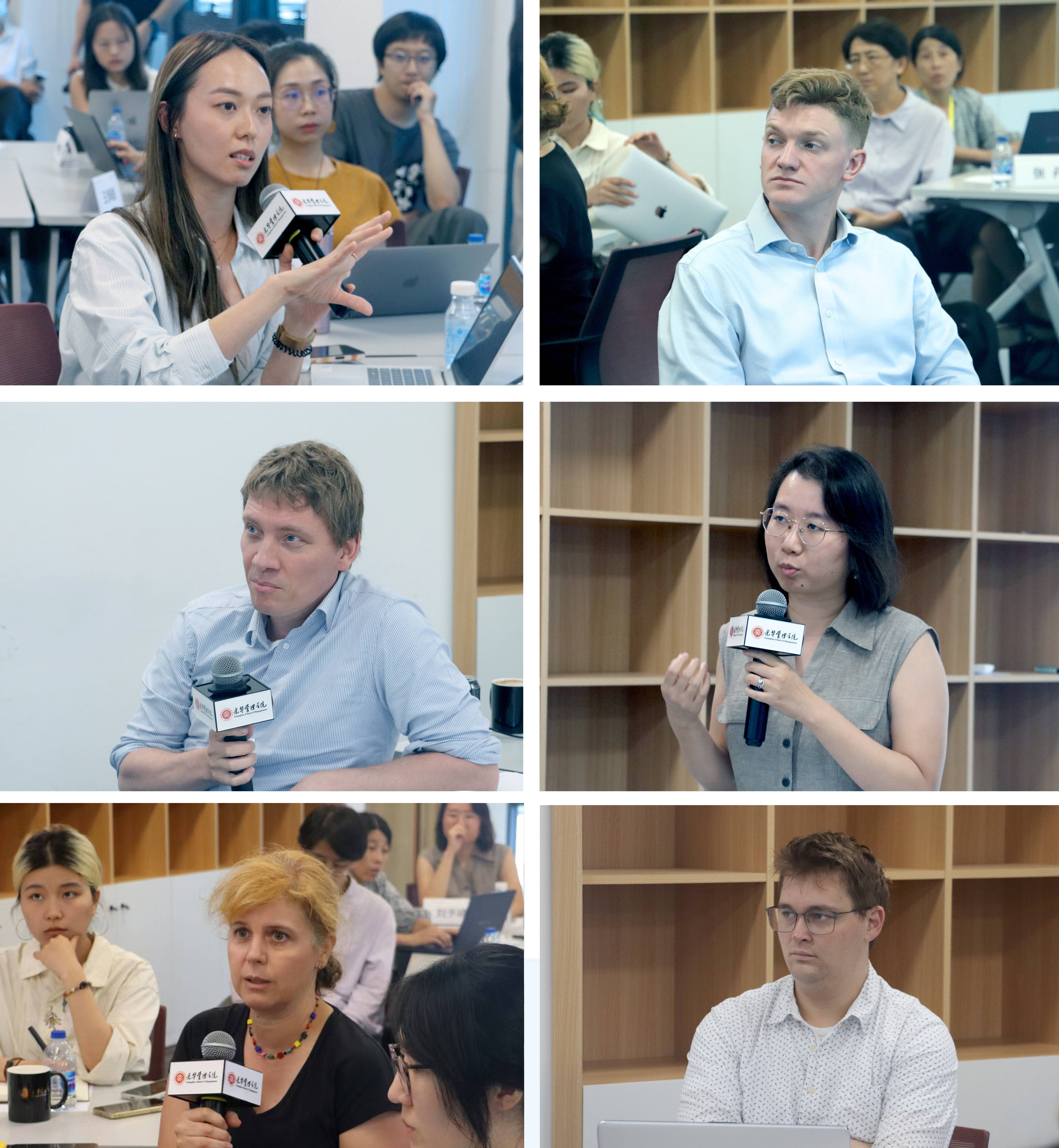
The subsequent Q&A session featured the three professors answering journalists' questions and exchanging views on key themes such as benign China-US tech interaction, Chinese firms' global expansion, China's economic structural reforms, and AI's role in driving broad-based growth. The event concluded with a far-reaching dialogue covering global industrial restructuring, AI-powered productivity and China's economic transition, offering attendees profound insights into the structural transformations of China's economy and its place in a shifting global economic landscape.
Source: External Relations Department, Guanghua School of Management, Peking University
Media contact: media@gsm.pku.edu.cn