Peking University, September 16, 2026: How should universities remain faithful to their original aspirations while responding to a rapidly changing world?
Prof. Dr. Julia von Blumenthal, president of Humboldt University of Berlin (HU Berlin), addressed this question in a speech delivered at Peking University (PKU) on September 10, as part of the anniversary celebration of 40 years of partnership between the two institutions. Her delegation visited PKU on September 10 and 11, during which they attended 7 panel discussions and toured multiple departments and labs on campus.
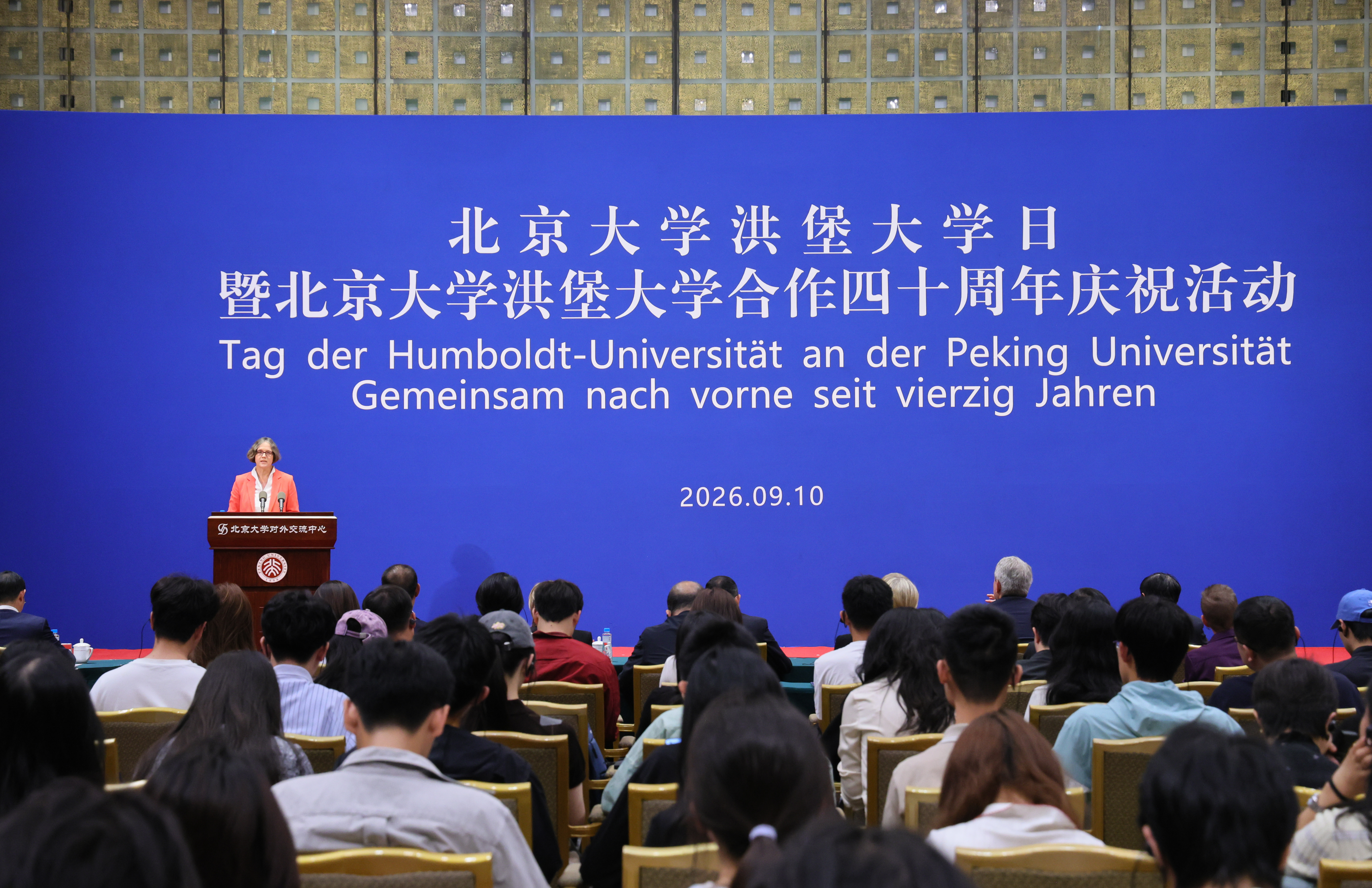
She pointed out that according to the theory of Wilhelm von Humboldt, the founder of Humboldt University, science requires solitary contemplation. However, she also pointed out that, in the face of the contemporary landscape, which is being rapidly reshaped by technology and uncertainties, cooperation is becoming the norm.
"Difficult research projects, especially in the natural sciences and life sciences, require cooperation across disciplines and institutions to succeed," she stated.
Her view is borne out by a range of collaborative initiatives over the past 40 years, including the Center for German Studies at PKU, the Sino-German University Presidents' Meeting, and the three joint research projects funded by HU Strategic Partnership Flexible Funds this year.
He Guangcai, Chair of the PKU Council, spoke highly of the partnership. He said that as both universities have played a historic role in promoting modern higher education, their cooperation can not only facilitate the China-Germany relationship, but also contribute to communication and mutual learning among universities around the world.
This sentiment was echoed by Gao Song, President of PKU, who underscored the strong academic foundation of HU Berlin and the global impact of Wilhelm von Humboldt’s vision of higher education. He expressed the desire that the two institutions would build on past progress and usher in a deeper partnership for the future, spearheading a new era of China-Germany higher education cooperation.
This desire was already partly fulfilled at the anniversary ceremony, which witnessed the signing of a new memorandum of understanding (MOU) and a student exchange agreement by Gao Song and von Blumenthal. Moreover, they presented certificates to the first five research projects supported by the PKU-HU Joint Research Fund, covering the disciplines of digital education, international law, physics, psychology, and classical literature.
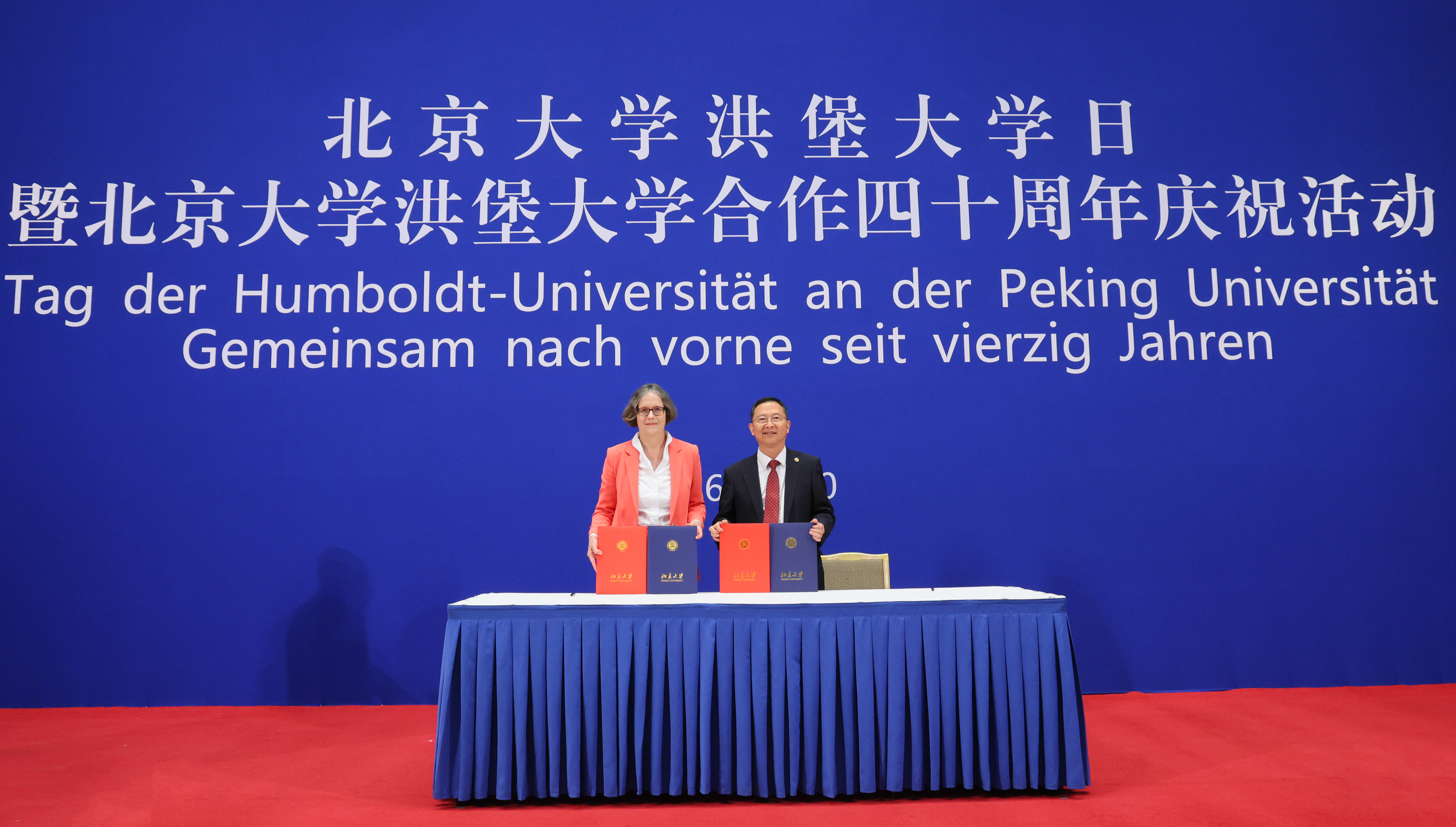
Julia von Blumenthal and Gao Song signing a new memorandum of understanding
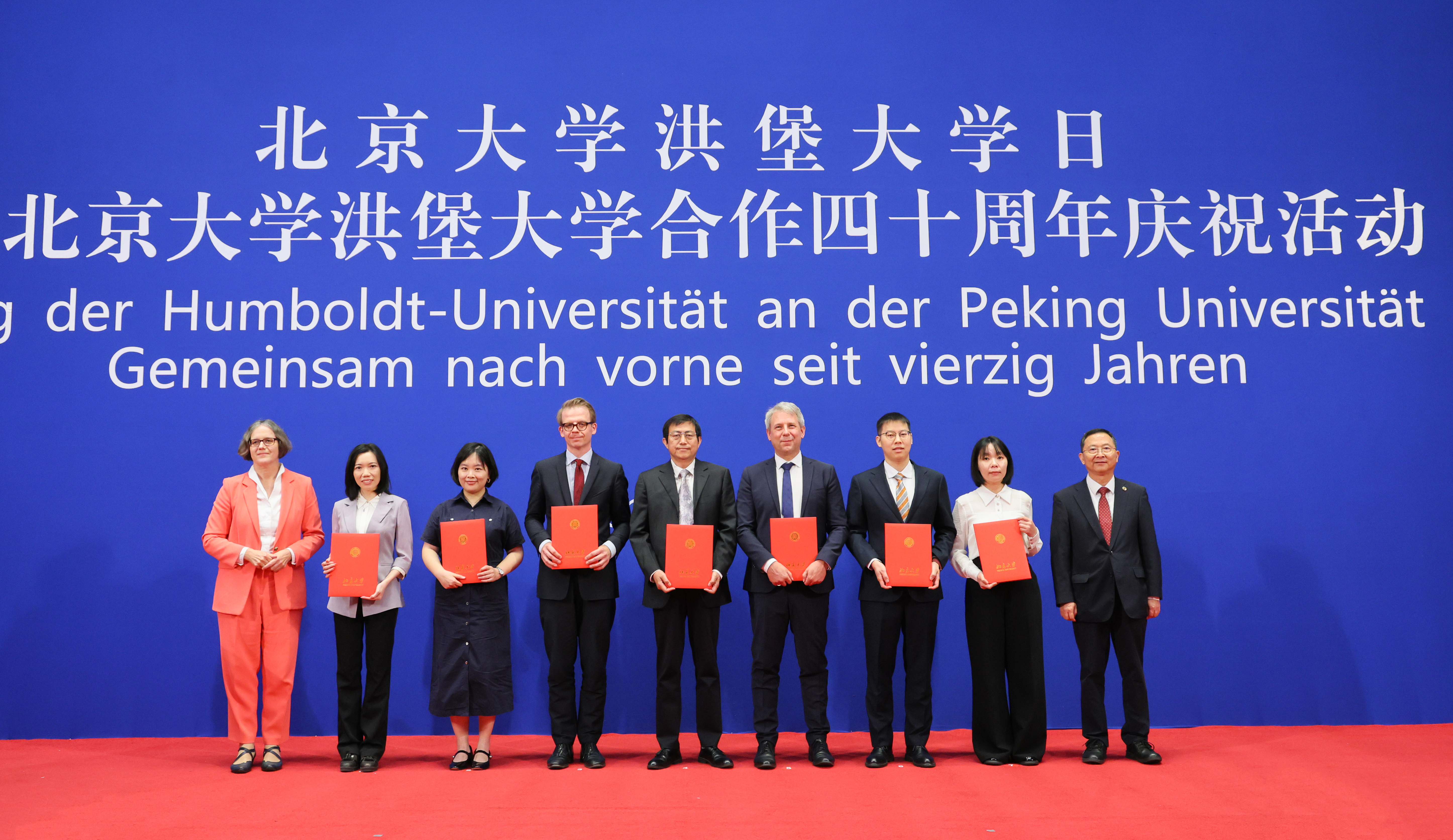
Julia von Blumenthal and Gao Song presenting the certificates
For von Blumenthal, this close partnership over four decades has cemented a deeper connection between the two universities, which she described as a relationship built on trust, openness, and a mutual willingness to learn.
She connected this spirit to principles rooted in Wilhelm von Humboldt's legacy—principles that still remain at the heart of the university's identity: freedom and independence of research, academic liberalism, and social responsibility.
Yet traditions, she suggested, should be preserved in their essence but constantly adapted to changing circumstances. Therefore, the continued development of a university requires both connection to its origins and courage to change.
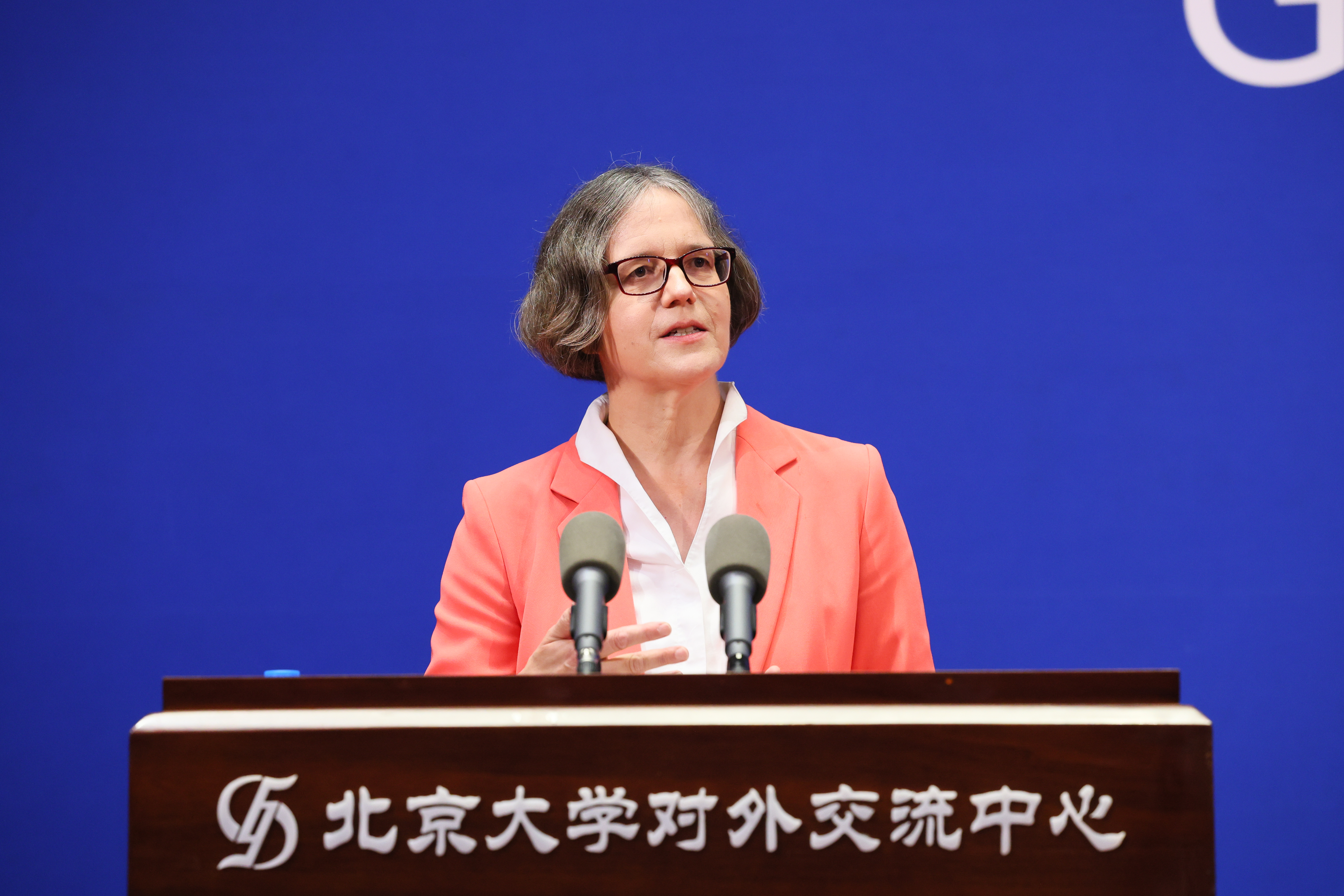
Julia von Blumenthal
The need for transformation is palpable today, as artificial intelligence and digital technologies such as social media are reshaping research, education and the ways knowledge is created and shared.
As a solution, she emphasized cooperation across disciplines and institutions. “Today’s challenges, whether it’s climate change or the social, educational, and economic impact of AI, are clear evidence of our need to cooperate,” she emphasized.
von Blumenthal also pointed out that both institutions were established during profound political and social upheavals, and were similarly tasked with promoting modern university education in an agitated national context. They both continue to be the national centers for philosophers and thinkers.
It was this shared historical experience, she continued, that fostered an affinity between the two institutions, and instilled in them a new responsibility to advance dialogues among global higher education institutions amid unprecedented geopolitical uncertainties.
Now, as the partnership enters its fifth decade, von Blumenthal sees the anniversary not simply as a moment for stock-taking, but more importantly as an opportunity to ask what the two universities can accomplish together in the years ahead.
"Curiosity, openness, respect, and foresight are the spirit of the partnership," she concluded. "And I expect HU Berlin and PKU to walk this path together in the coming decades."
In the Q&A session following her remarks, PKU students raised questions about academic and employment pressure and about how personal development can be aligned with academic liberalism.
In response, von Blumenthal stated that universities shoulder a dual responsibility of helping students pursue their interests and responding to the needs of society. She acknowledged that the balance between educational freedom and academic standardization was difficult to achieve, but also noted that a student should always have a clear goal in mind.
On the topic of AI, von Blumenthal suggested that universities should assess their own needs and be prudent in adopting AI in its curriculum. She argued that basic research is definitely not a luxury, but the foundation to the development of knowledge and society. Therefore, universities should focus on both commercialization and long-term values of basic research.
She also sat down with PKU News for a brief interview on September 11, where she expressed appreciation for the warm welcome activities at Yanyuan campus, and encouraged more German students to study in China.
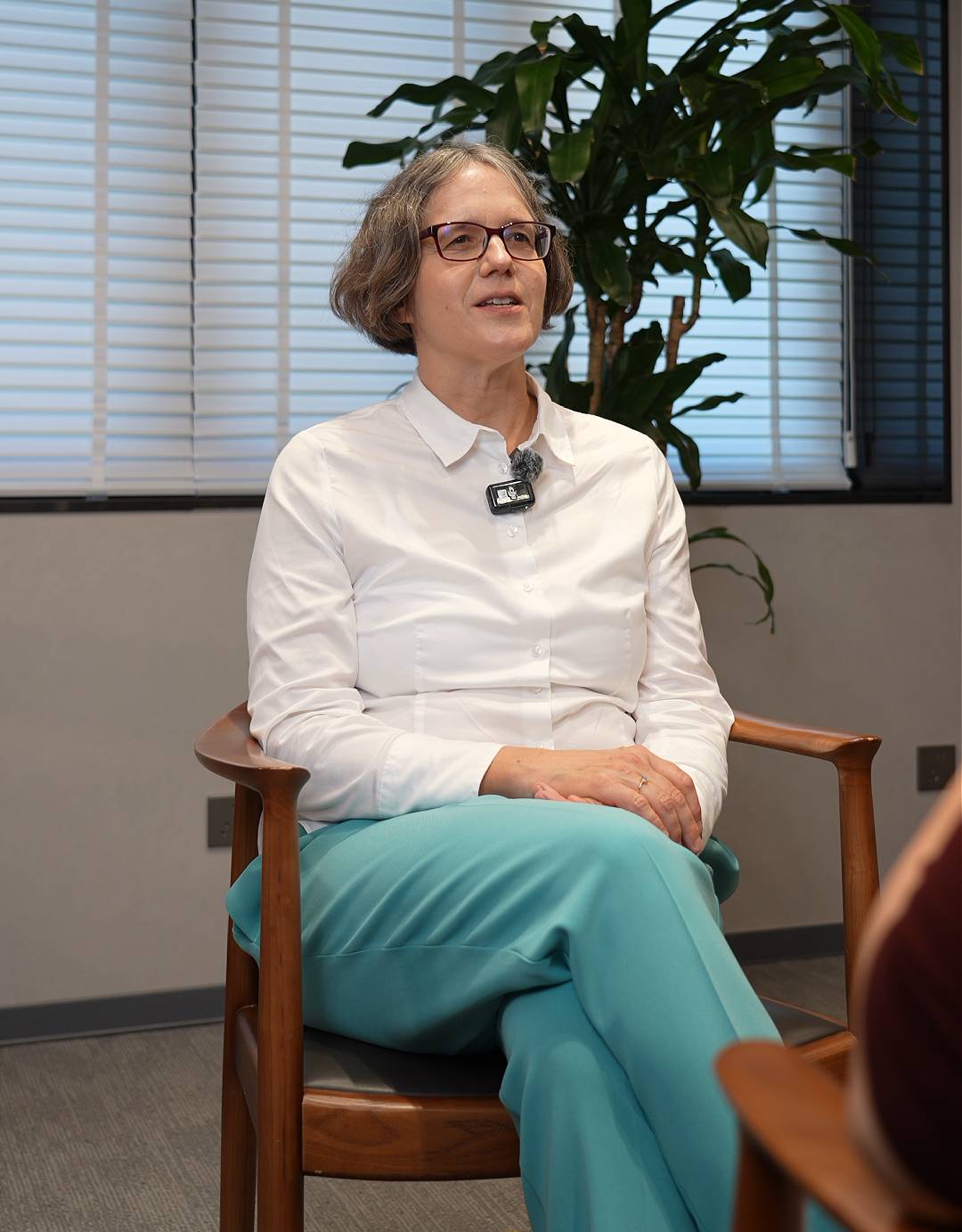
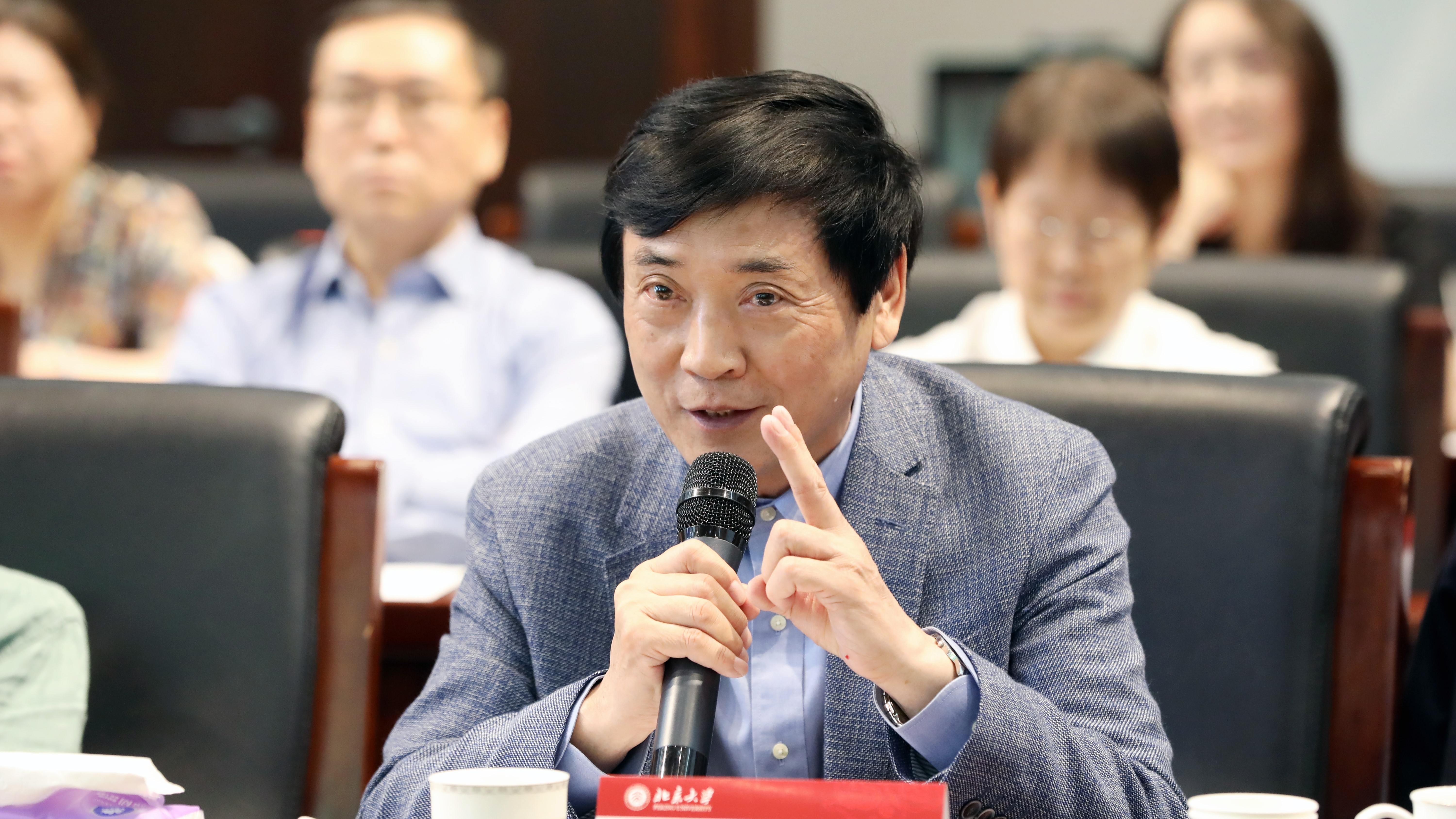
Julia von Blumenthal in an interview with PKU News
Reported by: Wu You
Edited by: Chen Shizhuo
Photo by: Li Xianghua, Liu Yan, Li Mengyao, Guo Mengjiao, Wang Ziqian, Zheng Zibo