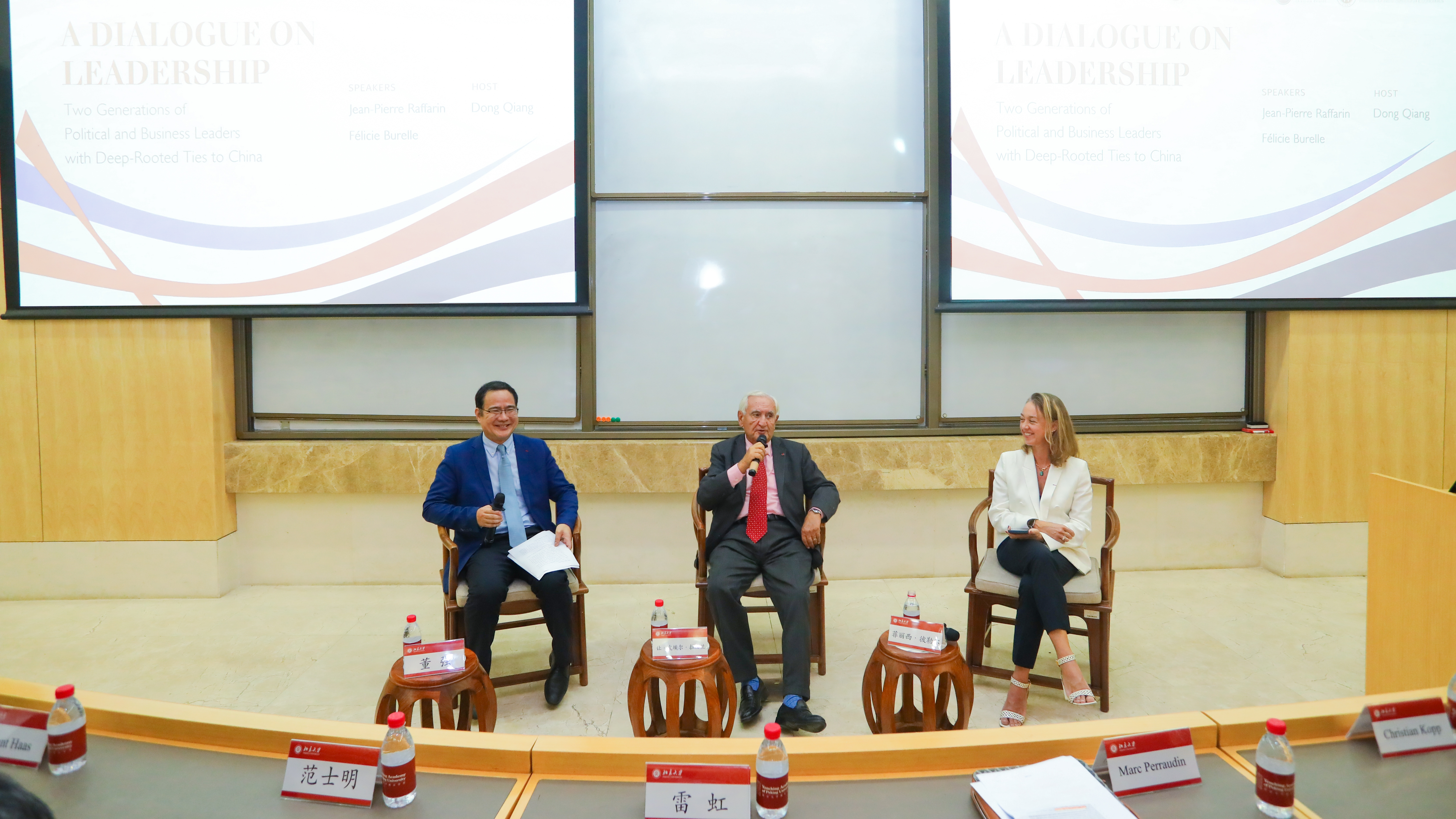
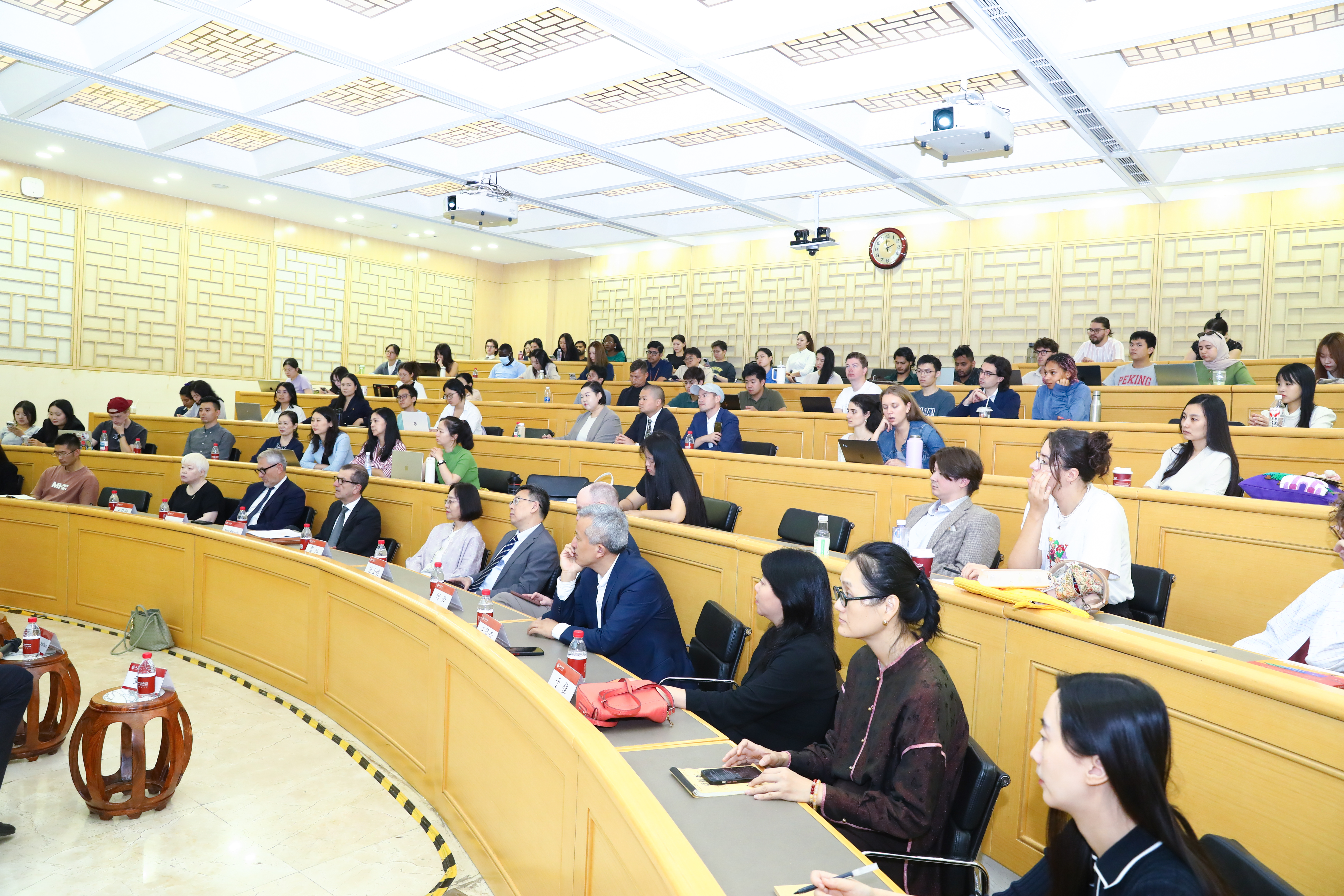
Peking University, September 30, 2026: On the afternoon of Sept. 28, Peking University brought together former French Prime Minister Jean-Pierre Raffarin and Félicie Burelle, CEO of OPmobility, a French automotive supplier, for "A Dialogue on Leadership: Two Generations of Political and Business Leaders with Deep-Rooted Ties to China." Moderated by Dong Qiang, dean of Yenching Academy and professor at PKU's School of Foreign Languages, the conversation touched on leadership, corporate responsibility, technological transition, and China-Europe relations.
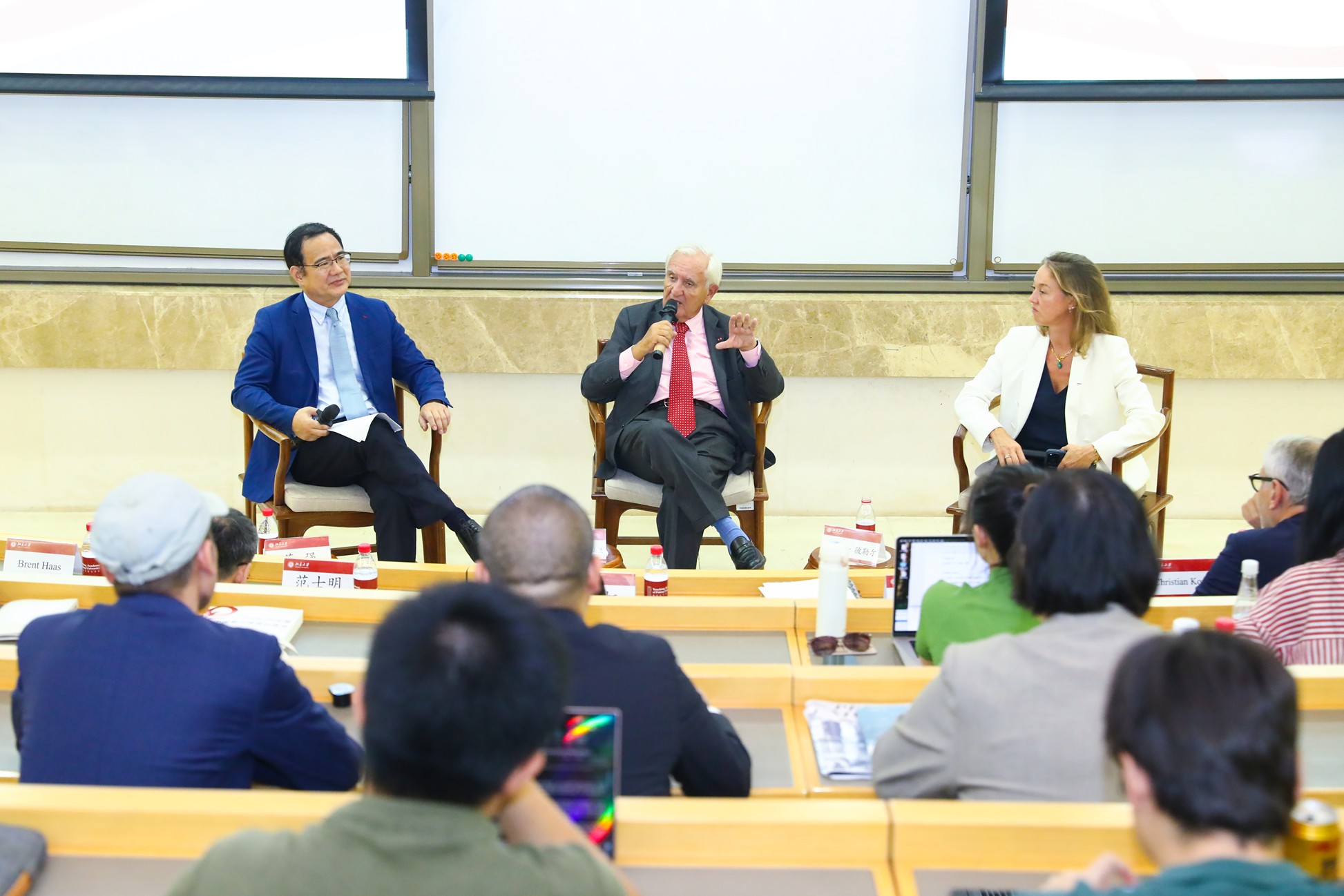
From left to right: Dong Qiang, Jean-Pierre Raffarin, and Félicie Burelle
Raffarin opened by describing leadership as the ability to unite vision, direction, and people. "There is no leader without vision," he said, arguing that leaders must clarify where a group is going, determine how to get there, and build harmony along the way. Leadership, he added, is not limited by age or experience. It depends on recognizing one's strengths and developing them in service of a collective goal. He also suggested that women and men may lead through different forms of communication and listening, while sharing the same duty to guide others responsibly.
Burelle connected these ideas to her experience leading a family-owned industrial group. OPmobility, founded by her grandfather nearly 80 years ago, now operates 150 plants in 28 countries, including 40 in China. She emphasized that leadership must be authentic and grounded in action. "You don't inherit a position; you have to earn it," she said, explaining that her international education, language skills, and experience outside the family business helped her establish her own legitimacy. For her, curiosity and close contact with employees and customers are essential to building a long-term vision.
The discussion also addressed OPmobility’s energy transition. Burelle said hydrogen should complement rather than simply compete with battery-electric technology, particularly in applications such as buses, trucks, and trains. OPmobility has invested heavily in hydrogen storage and fuel cell systems, but wider adoption will require scale, infrastructure and green hydrogen production. She identified China’s coordinated approach to technology, infrastructure and industrial development as a major opportunity for future cooperation.
Raffarin framed China-Europe relations around three linked areas: sovereignty, competition, and cooperation. Competition can stimulate innovation, he said, but it must be fair and governed by shared rules. Cooperation is vital in fields including aviation, health, research and hydrogen. He urged Europeans to discard fear and outdated images of China, calling for more direct cultural and political exchange. Burelle added that tariffs, regulation, and supply chain changes have made business and politics increasingly intertwined, making stability and long-term thinking more important for global companies.
The discussion concluded with a shared emphasis on authenticity, responsibility, and mutual understanding as foundations of leadership in an uncertain world.
Written by: Akaash Babar
Edited by: Chen Shizhuo